
Same chicken.A different bite.
Crunchy, tender, light or creamy. Chicken cat food takes different forms because the recipe, moisture and process change what ends up in the bowl.

One ingredient is only
the beginning.
Products labeled as chicken cat food can differ widely in texture and intended use. To understand why, consider how the ingredients are prepared, processed and served. For a brand, this also creates a practical question: what experience should the product deliver, and what is it intended to do?
Chicken cat food: four forms, four experiences.
Dry kibble

In many dry-food recipes, chicken is mixed with other ingredients before the mixture is cooked and shaped through extrusion. Drying then reduces moisture. The resulting kibble reflects the entire formulation and processing method, rather than the original shape of the chicken.
Sample focus: Review piece size, consistency and breakage in a sample. 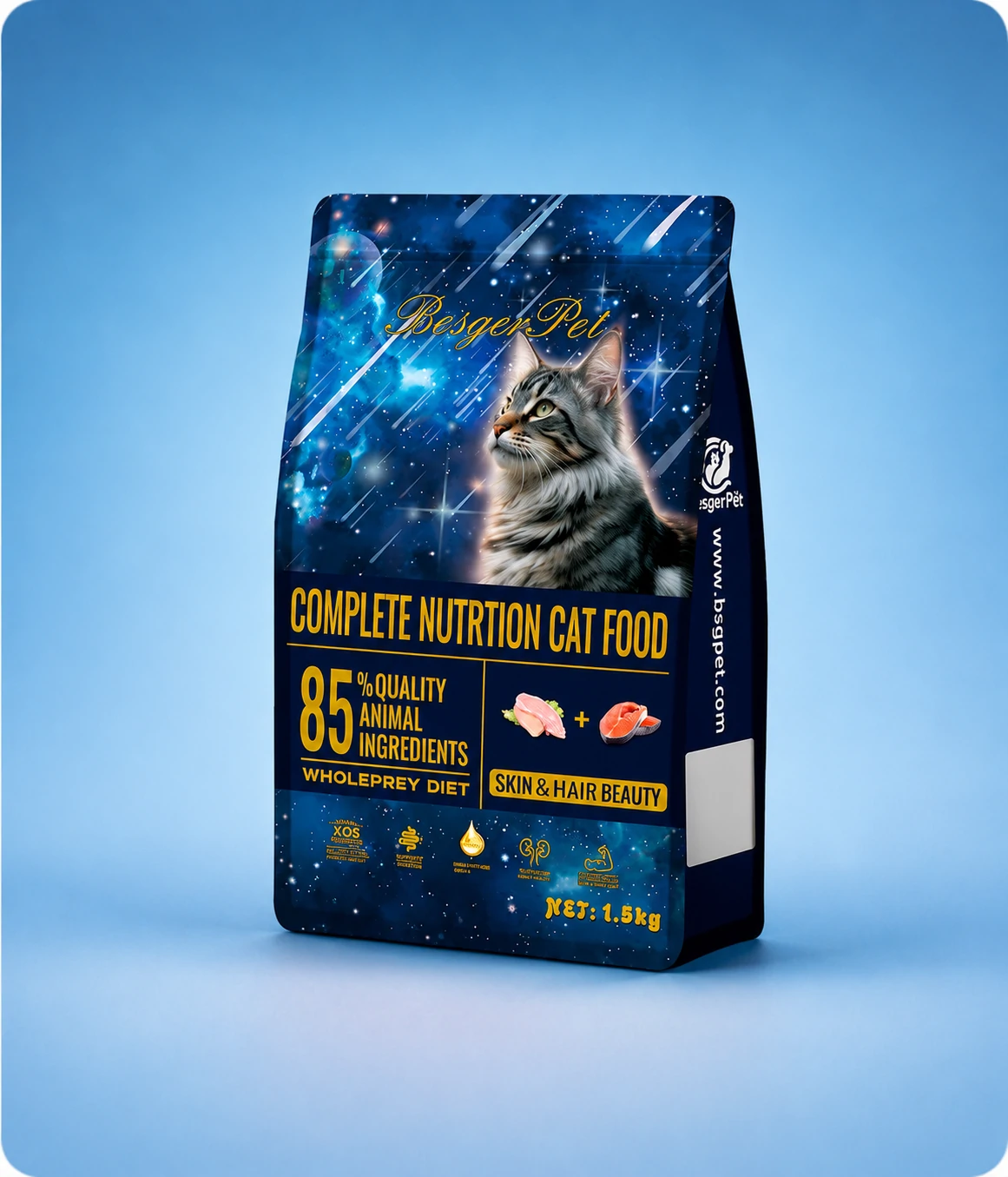 From the BSG rangeComplete fresh meat cat foodCompare kibble options for your product brief.View product →
Wet food

Chicken can be shredded, minced or blended into pâté. The amount and consistency of the liquid also affect the texture: the meat may be served in broth, in gravy or as a softer blended mixture. Canned food is filled, sealed and heat-processed. Texture and packaging are separate choices: a can does not automatically mean pâté.
Sample focus: Review the balance of solids and liquid, plus serving consistency. 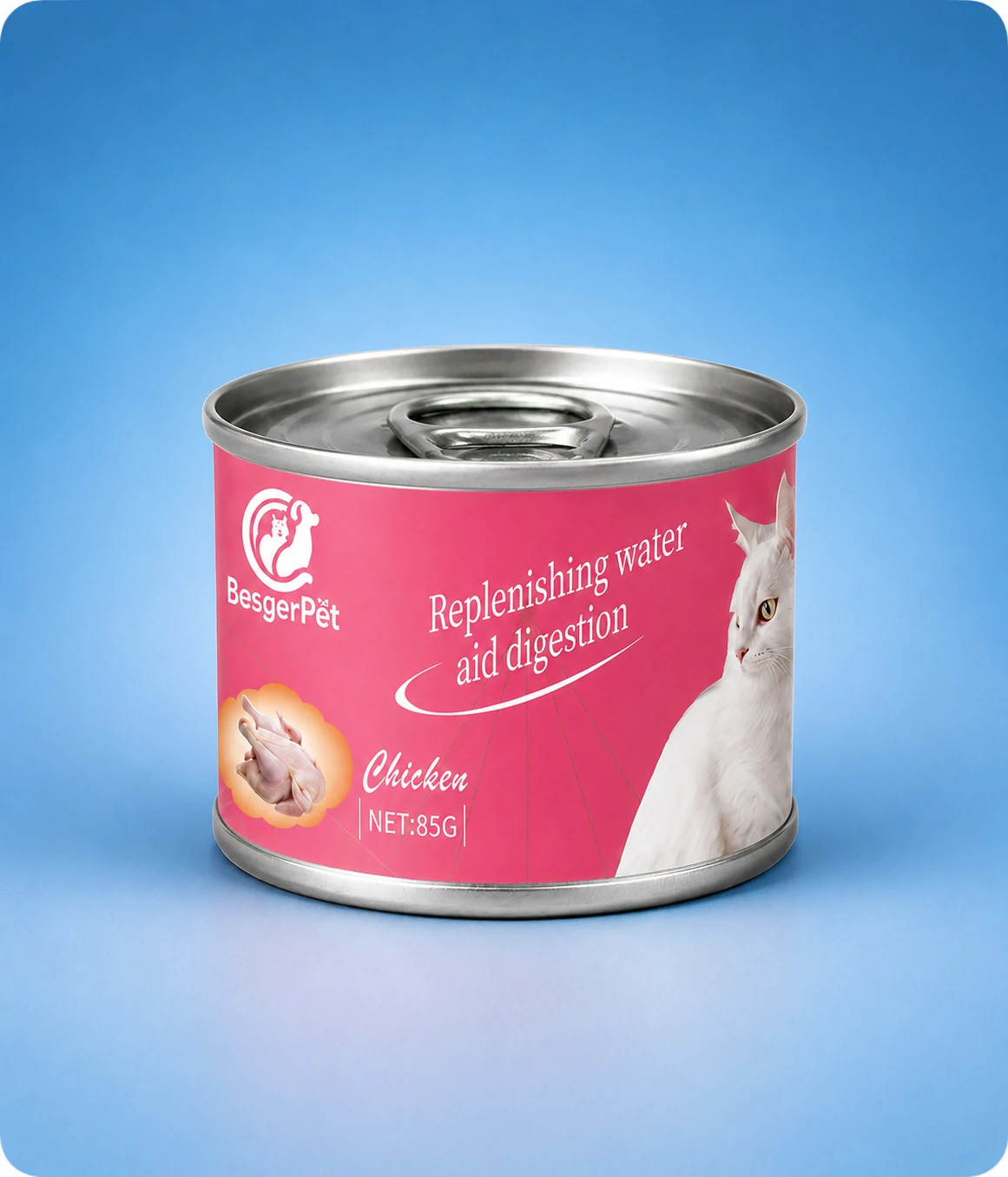 From the BSG rangeWet Canned Cat Food 85gExplore canned textures and chicken recipes.View product →
Freeze-dried

Freeze-drying removes moisture from frozen material under reduced pressure. This can produce light, porous pieces. However, the process does not define the ingredient list or feeding purpose. A single-ingredient treat and a formulated freeze-dried meal are different products.
Sample focus: Review piece size, crumbling and the intended serving instructions.
Creamy treats

Finely processed ingredients and a liquid base create a lickable texture. The recipe determines thickness and flow. Packaging matters here too: the texture should suit the pack opening, intended portion size and serving method, whether squeezed from a sachet or spooned from a container.
Sample focus: Review flow, separation and how much remains inside the pack. 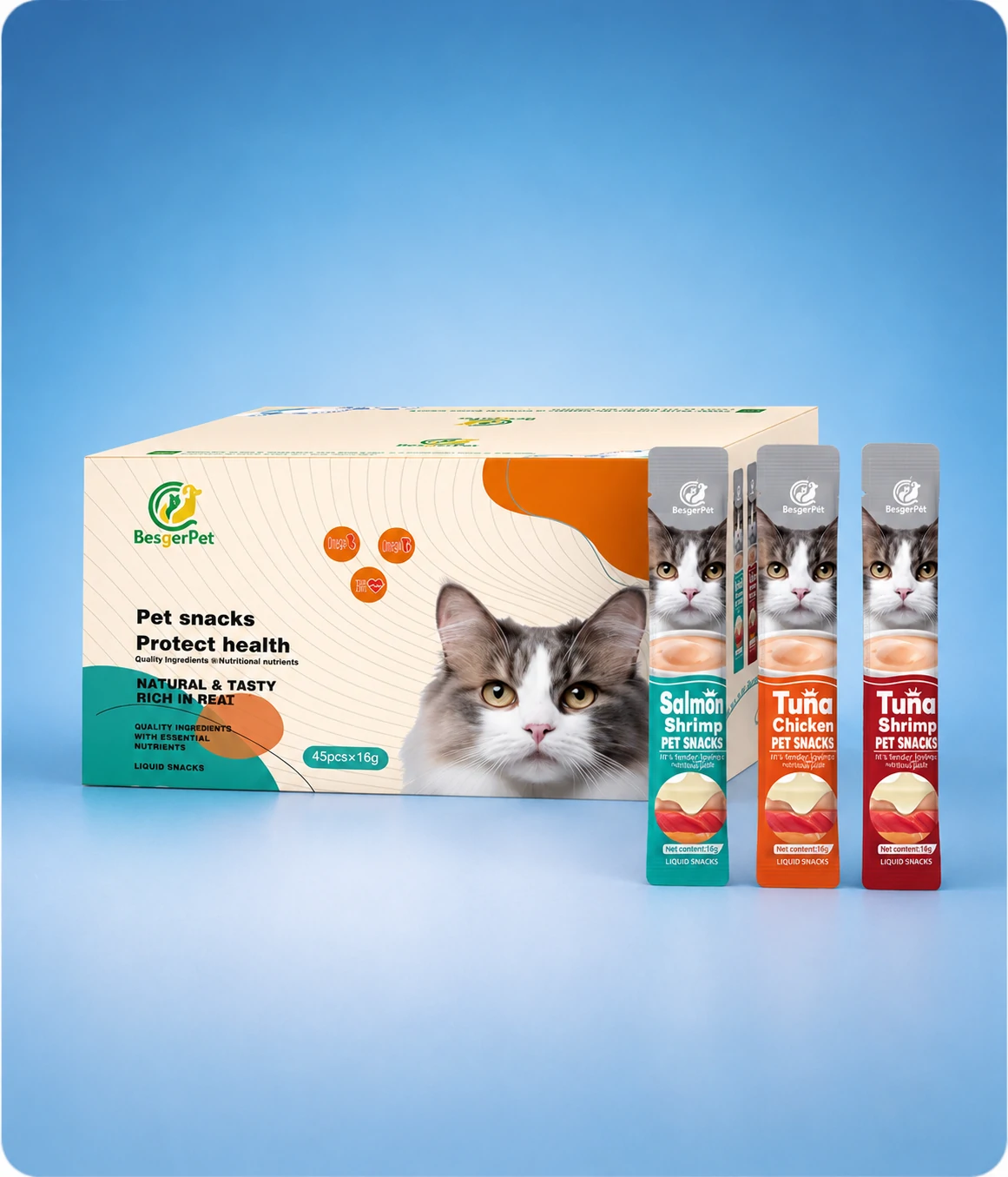 From the BSG rangeCat StripExplore 15g lickable treats, including tuna & chicken.View product →

Three decisions.
A different texture.
The complete recipe
Chicken works alongside the rest of the ingredients. Two chicken-based foods can therefore have different structures and feeding purposes.
The preparation
Shredding preserves visible strands. Fine blending creates a smoother mixture. The size of the prepared pieces affects the appearance and texture of the finished food.
Moisture and processing
Drying, freeze-drying and wet-food processing follow different routes. Evaluate the finished texture together with its recipe and packaging.
Start with the product’s job.
Choose a format after defining its role. Shape alone cannot tell you whether a product is a daily meal or a supplemental food.
| Product role | Development question | What to confirm |
|---|---|---|
| Daily food | Which life stage and feeding routine? | Nutritional adequacy and clear feeding directions. |
| Topper | How will it be added to a meal? | Serving amount, texture and whether it is supplemental. |
| Treat | What interaction or reward does it offer? | Portion size, feeding directions and dispensing experience. |
These roles describe how a product is intended to be used. Its format alone does not establish whether it provides complete and balanced nutrition.
Review the sample.
Not just the photo.
A useful sample review considers both appearance and how the product handles during serving. Record specific observations so the manufacturer can make clear adjustments to the recipe or packaging.
Open & observe
Check piece consistency, visible separation and the condition of the pack. Compare the sample with the agreed description.
Serve & handle
Pour, scoop or squeeze it as intended. Note breakage, flow and residue. Record the serving conditions for a fair comparison.
Read the label
Confirm ingredients, intended life stage, nutritional adequacy and feeding directions. Review claims for the target market.
Write the feedback
Make specific requests, such as smaller pieces, a smoother texture or a different pack size. Confirm what will change in the next sample.
Good questions.
Clearer decisions.
Answers to the details a product photo cannot explain.
Does visible chicken mean a higher meat content?
Not necessarily. Visible shreds describe the physical texture. They do not reveal the full recipe or establish nutritional completeness. Review the ingredient list and product information rather than judging by appearance alone.
Why can wet food show a lower protein percentage than dry food?
The protein percentage on a label is usually reported on an as-fed basis, which includes moisture. Because wet and dry foods contain different amounts of water, compare their protein levels on a dry-matter basis for a more meaningful comparison. A lower as-fed protein percentage alone does not show that a food contains less protein on a dry-matter basis.
Can freeze-dried chicken or creamy treats replace a daily meal?
Only if the specific product is formulated and labeled for that purpose. Do not assume a format is a complete diet. Check nutritional adequacy, life stage and feeding directions; treats and supplemental products are generally not intended as the sole diet.
Should a chicken product range use one recipe in every format?
Each format needs an appropriate development brief. Moisture, processing, texture and packaging can differ, so an approved kibble recipe should not simply be treated as an approved wet food or treat recipe. Evaluate each finished product against its intended purpose.
What should a brand decide before asking for samples?
Confirm the target market, feeding purpose, preferred format, pack size and target price range. Then request samples that match that brief. Keep notes on texture, packaging and label information so the manufacturer can respond to specific feedback.
Make the next bite your own.
Share your preferred format, feeding purpose and packaging idea with BSG. Explore OEM/ODM development around a clear product brief.