
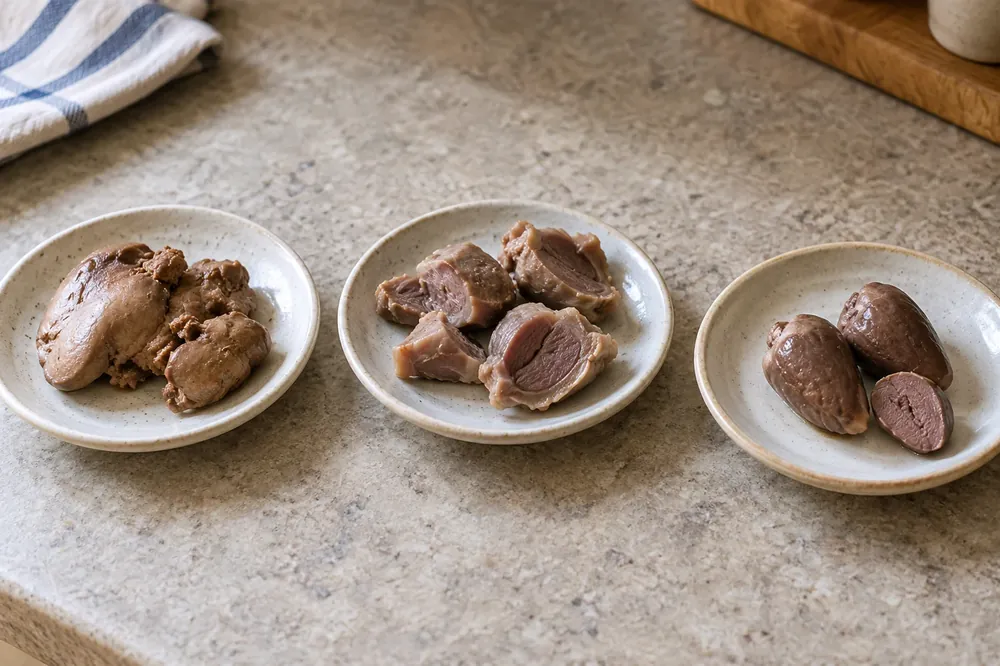
Liver · Gizzards · Hearts
Three organs.
Three nutritional strengths.
Organ meat for cats can provide useful nutrients as part of a balanced diet. Liver supplies preformed vitamin A and minerals. Gizzards contribute protein from muscle, while hearts provide protein and taurine. Their value depends on the amount used, the rest of the recipe and how the food is prepared.
Explore the ingredients
01 / Understand the ingredients
Benefits of organ meat for cats
A chicken’s liver, gizzard and heart do different jobs. Their nutrient profiles differ, too. Understanding those differences helps you choose food and avoid unsuitable ingredient swaps.

Concentrated micronutrients
Liver
Vitamin A · B vitamins · minerals
Cats need preformed vitamin A, which supports normal vision, growth and tissue maintenance. Liver provides this form of the vitamin. It also supplies several B vitamins and minerals such as iron. Research on chicken by-products found a much higher vitamin A concentration in liver than in gizzards or hearts. [1] [2]
However, a concentrated nutrient source needs careful portion planning. A food manufacturer balances liver with the other ingredients and added nutrients. Repeatedly feeding excessive liver can lead to vitamin A toxicity. [2]
Before adding extra: check what the complete daily food already supplies.

Muscular tissue
Gizzards
Protein · amino acids
The gizzard is a bird’s muscular stomach. It supplies protein and amino acids that the body uses to build and maintain tissues. Although gizzards and liver are both internal organs, their vitamin profiles are very different. [1]
Gizzards also have a firm texture. For a planned home-prepared extra, chop the cooked portion into pieces your cat can manage. Choose the texture around the individual cat’s eating ability.

Protein and taurine
Hearts
Protein · taurine
Heart is muscular tissue that supplies protein and taurine. Cats make too little taurine to meet their needs, so their diet must provide it. This nutrient supports normal vision and heart muscle function. [3]
Still, seeing “heart” on an ingredient list does not prove that the finished food supplies enough taurine. The amount eaten and the preparation method matter. Research shows that cooking methods affect taurine retention, so assess the complete recipe. [4]
02 / From ingredient to bowl
How to feed organ meat to cats safely
First decide its role. Then prepare the food and measure the chosen portion.

Plan. Prepare. Portion.
Choose its role
For a complete commercial food, follow the label’s feeding directions. Treats and toppers count as extras within the daily plan. If you want a homemade main diet, use a recipe developed by a qualified veterinary nutritionist. Simply combining meats and organs will not establish nutritional balance. [2] [5]
Prepare it safely
Follow packaged-food instructions. For home-prepared chicken organs, use a food thermometer to confirm an internal temperature of 165°F (74°C). Keep them plain, without onion, garlic or bones, and let them cool before serving. Also wash hands, tools and surfaces after handling raw ingredients. [6] [7] [8]
Weigh, chop and serve
For a planned extra, weigh the cooked portion before chopping it. Next, cut it into manageable pieces and mix it through familiar food. Check that your cat also eats the main meal. Refrigerate unused cooked organs or opened wet food promptly, following product instructions. Clean the bowl after use. [7] [8]
03 / Choose the finished food
Choosing food with organ ingredients
Choosing organ meat for cats starts with the ingredient list. Then check the food’s intended use and feeding directions.
BSG formats to compare: the products below have published nutrient information. Their public specifications do not confirm liver, gizzard or heart ingredients. Request the current full formula when a named organ is essential.

BSG Kitten Dry Cat Food
The page identifies a kitten formula and lists added vitamin A and taurine. Check its suitability for growth, calories and full ingredient list when comparing recipes.

BSG Wet Canned Cat Food, 85 g
The page lists meat-based recipes, wet textures and added taurine. Before including it in a feeding plan, confirm complete or complementary status, calories and the current formula.
For an organ-based OEM brief, specify the animal species, named organs, feeding role and target life stage. Discuss formula development with BSG.
04 / Questions that matter
Organ meat for cats: FAQ
How much liver can I give my cat?
There is no single gram amount that suits every cat. Consider the liver’s vitamin A concentration, the rest of the diet and your cat’s needs. For routine additions, ask your veterinary team to set a suitable portion. The treat-calorie ceiling does not establish a safe liver dose. [2] [7]
Can chicken hearts replace a taurine supplement?
Do not make that swap in a formulated recipe or treatment plan without professional advice. Hearts contain taurine, but pieces vary in size and cooking affects retention. A prescribed supplement amount and an unmeasured portion of heart are not equivalent. [3] [4]
Can gizzards replace liver gram for gram?
No. Gizzards mainly contribute muscular tissue, while liver has a much more concentrated vitamin A profile. A direct swap changes the recipe’s nutrient supply. If an ingredient in a formulated homemade diet is unavailable, have the recipe adjusted before substituting it. [1]
Is a “100% organ meat” treat a complete food?
The ingredient claim alone does not establish nutritional completeness. Even a mixture of liver, gizzards and hearts needs a balanced supply of all required nutrients. Check for an appropriate nutritional adequacy statement before using any product as the main daily food. [2] [5]
Does freeze-dried mean the organs are cooked?
No. Freeze-dried products may contain raw ingredients, and freeze-drying does not kill all germs. Check the processing information and handling instructions. CDC advises against feeding raw pet food or treats because they can spread pathogens to pets and people. [8]