
KITTEN CARE / THE FEEDING NOTEBOOK
Can Kittens Eat Freeze-Dried Cat Treats?
Choosing freeze-dried cat treats for kittens starts with a simple question: is this particular product suitable for your kitten?
Yes, some fully weaned kittens can have small amounts of an age-appropriate cooked cat treat. For a freeze-dried product, check how it was made, the feeding directions, and the size of the pieces. Keep complete kitten food as the main diet.
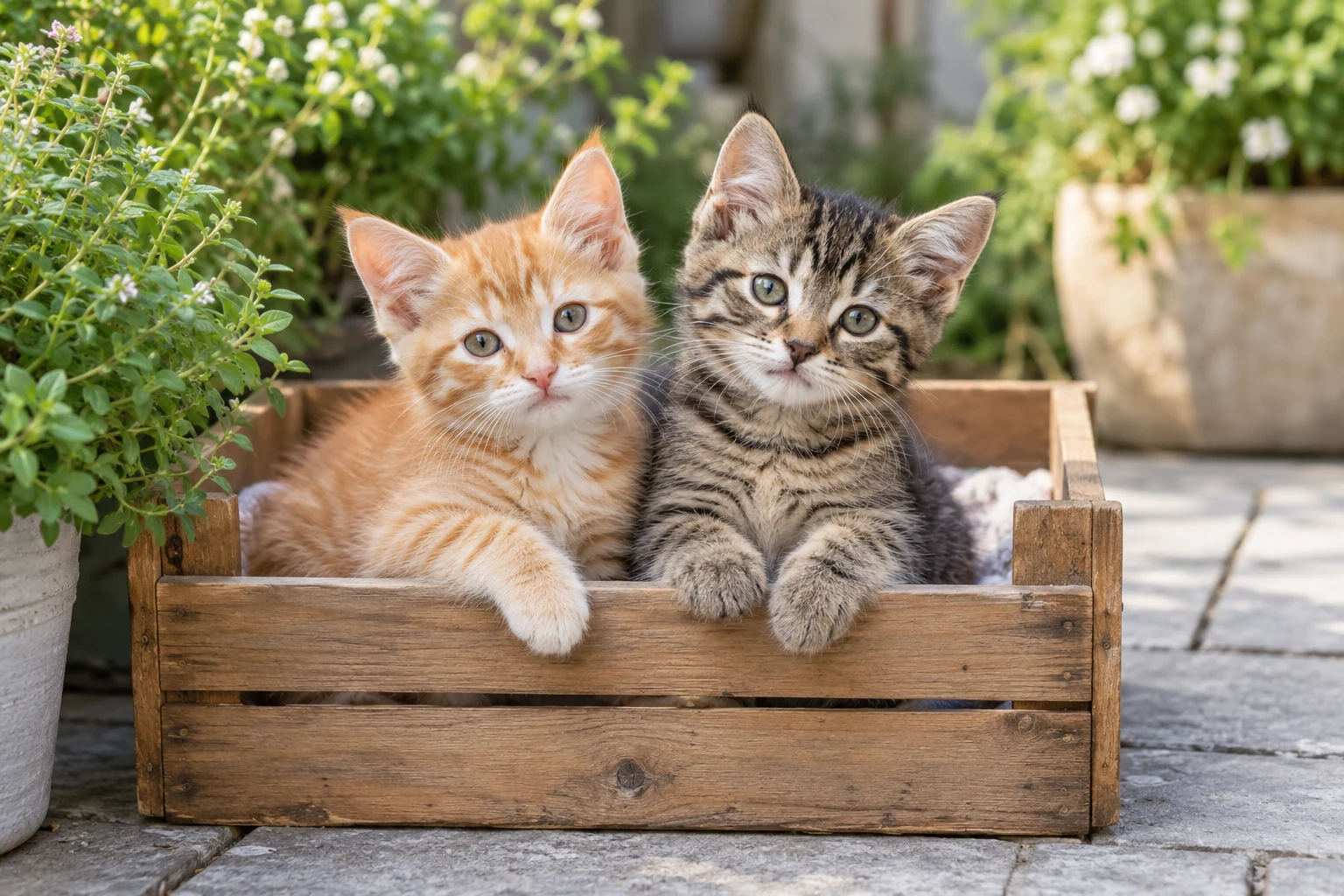
This guide explains what to check before the first taste, how to calculate a small portion, and how to introduce a new treat.
Four Checks Before the First Treat
IN THIS GUIDE
Readiness · Process · Advantages · Label checks · Portions · First taste · FAQ
Start with a fully weaned kitten that comfortably eats complete kitten food.
Confirm whether the animal ingredients were cooked before freeze-drying.
Follow the size instructions and supervise your kitten while it eats.
Count all snacks and toppers within the same daily treat allowance.
01 / READINESS
When Can Kittens Have Freeze-Dried Treats?
Being curious about your snack is not the same as being ready for a treat. First, your kitten should be fully weaned and reliably eating its regular kitten food.
VCA’s kitten feeding guidance says weaning is typically complete at about eight weeks. However, that is a general milestone, not permission to feed every treat. Follow the product’s minimum-age instructions and ask your veterinarian if you are unsure.
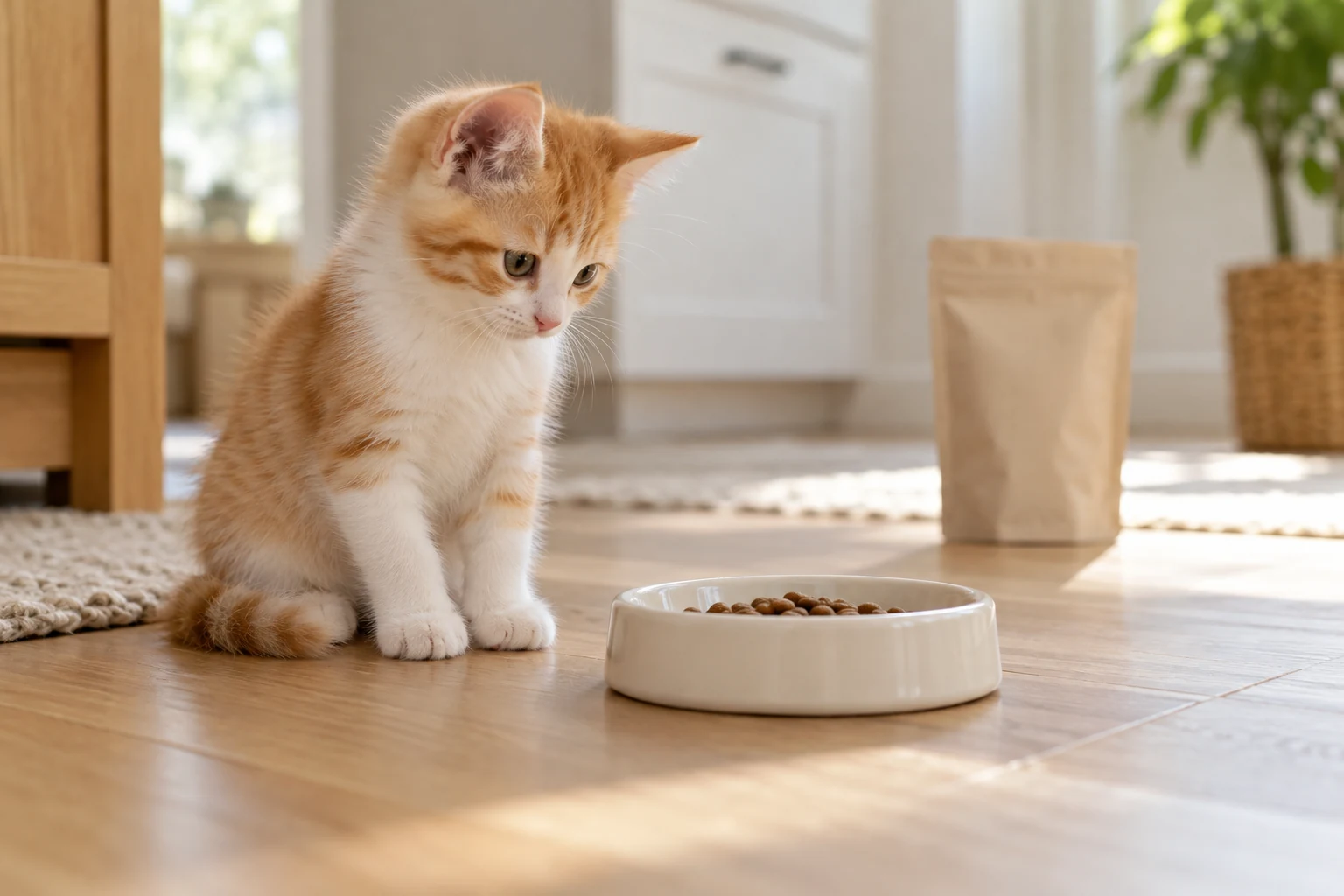
Use readiness and the product label to guide the first treat.
For the main diet, choose food that provides complete and balanced nutrition for growth or all life stages. VCA explains how to check this on a kitten food label. A single-ingredient snack does not replace that diet.
02 / PROCESS
Freeze-Dried Does Not Always Mean Cooked
Freeze-drying removes water from frozen food under a vacuum. It does not tell you whether the meat was cooked first.
CDC advises against raw pet food and treats. Freeze-drying raw animal ingredients does not eliminate every germ. For a kitten, choose an age-appropriate cooked product and confirm the preparation method with the manufacturer.
COOKED
Confirm the cooking step, kitten feeding directions, and storage instructions.
RAW
This is still a raw product. Adding water does not remove its food-safety risks.
03 / PRACTICAL ADVANTAGES
Benefits of Freeze-Dried Cat Treats
Freeze-dried treats offer practical advantages in texture, handling, and serving. Their value depends on the recipe, packaging, and manufacturing process. For kittens, use the age and safety checks above before considering these benefits.
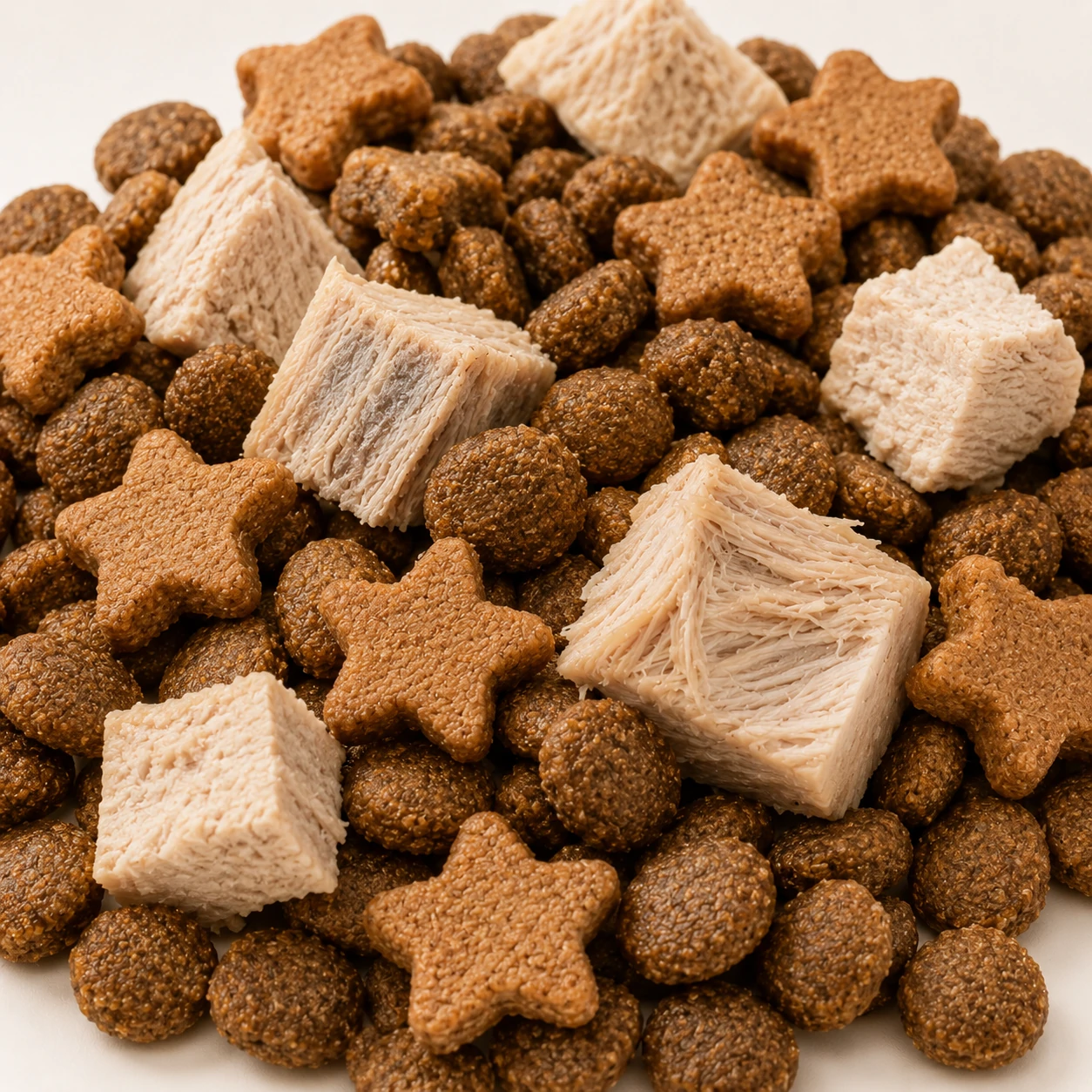
Texture illustration: pale dried pieces alongside shaped kibble. Read the label to identify the feeding category.
Gentle Drying Conditions
Freeze-drying removes frozen water under vacuum. This gentle dehydration process can help preserve food quality. The final nutrient profile depends on the recipe and any cooking before drying.
Lightweight and Convenient to Store
Removing water creates a lighter, dry product. Protective packaging matters because freeze-dried food can absorb moisture. Follow the label’s storage directions after opening.
Porous Texture and Serving Flexibility
A porous texture can help dried pieces absorb water. For an age-appropriate product, follow the label for dry feeding, crumbling, or rehydration. Weigh the portion before serving.
Flavors and Feeding Categories
Compare the protein source separately from the feeding purpose. Chicken, fish, and beef describe flavor groups. Treats, toppers, and complete foods serve different roles in the diet.
Flavor Groups
Chicken: the flavor specified on BSG’s current freeze-dried product page.
Fish, such as salmon: check the full recipe for other animal proteins.
Beef or mixed-meat recipes: compare every ingredient and the stated feeding age.
Fish and beef are category examples. Ask BSG to confirm any custom recipe’s availability and kitten suitability.
Feeding Categories
Treat pieces: small extras for occasional rewards. Follow the packet’s portion and minimum-age directions.
Topper crumbles: measured additions to the usual complete kitten food. Count them with the day’s other treats.
Complete freeze-dried food: a main-diet category only when the label confirms complete nutrition for growth or all life stages.
For kittens: choose a cooked, age-appropriate treat alongside a complete kitten diet. Next, use the label checklist to compare products, then the portion worksheet to plan a measured serving.
Food-processing background: USDA ARS: freeze-drying fundamentals; University of Minnesota: processing and storage; research on freeze-dried chicken texture and rehydration.
Feeding categories: FDA’s guide to complete and balanced pet food.
04 / THE LABEL CHECK
How to Choose Freeze-Dried Cat Treats for Kittens
Read the full label before comparing chicken, fish, or another flavor. A familiar protein can be a useful starting point, but the complete recipe and feeding directions matter more than the front-of-pack wording.
Use the checklist below to compare products. If an age recommendation, calorie value, or preparation method is missing, ask the manufacturer before feeding. For more on flavor preferences, see our guide to cat food flavors, texture, and nutrition.
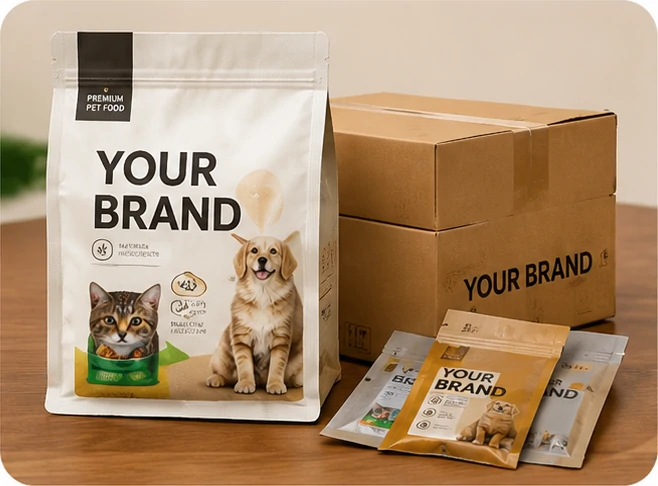
Check the product’s intended use, serving directions, and storage instructions.
AGE / PURPOSE / PORTION
| Check | What to look for | Why it matters |
|---|---|---|
| Kitten suitability | Minimum age and feeding directions for cats. | A product labeled for cats is not necessarily suitable for kittens. |
| Preparation | Confirmation that animal ingredients were cooked before drying. | Freeze-dried raw meat is still a raw product. |
| Feeding purpose | Treat, topper, or complete food statement. | Snacks must not displace a complete growth diet. |
| Ingredients | The full recipe and any dietary restrictions. | A flavor name does not identify every ingredient. |
| Size and texture | Pieces your kitten can comfortably manage. | Avoid large, hard pieces and supervise feeding. |
| Calories | kcal per piece, gram, or kilogram. | Use the labeled energy to measure a portion. |
| Storage and traceability | Seal, date, lot code, and storage directions. | Keep the details you may need to check a recall. |
This checklist draws on VCA’s treat guidance, WSAVA’s cat treat guide, and CDC’s food-safety guidance. It is a decision tool, not a product safety rating.
05 / THE PORTION WORKSHEET
How Much Can a Kitten Have?
There is no universal number of freeze-dried pieces for every kitten. Pieces vary in size, and products vary in calorie density.
WSAVA advises keeping treats below 10% of daily calories. Treat that as an upper limit, not a target to reach. Ask your veterinary team for your kitten’s daily calorie needs and a suitable treat allowance.
Next, subtract any other snacks or toppers from that allowance. Use the packet’s calorie information to convert the remaining calories into grams or pieces.
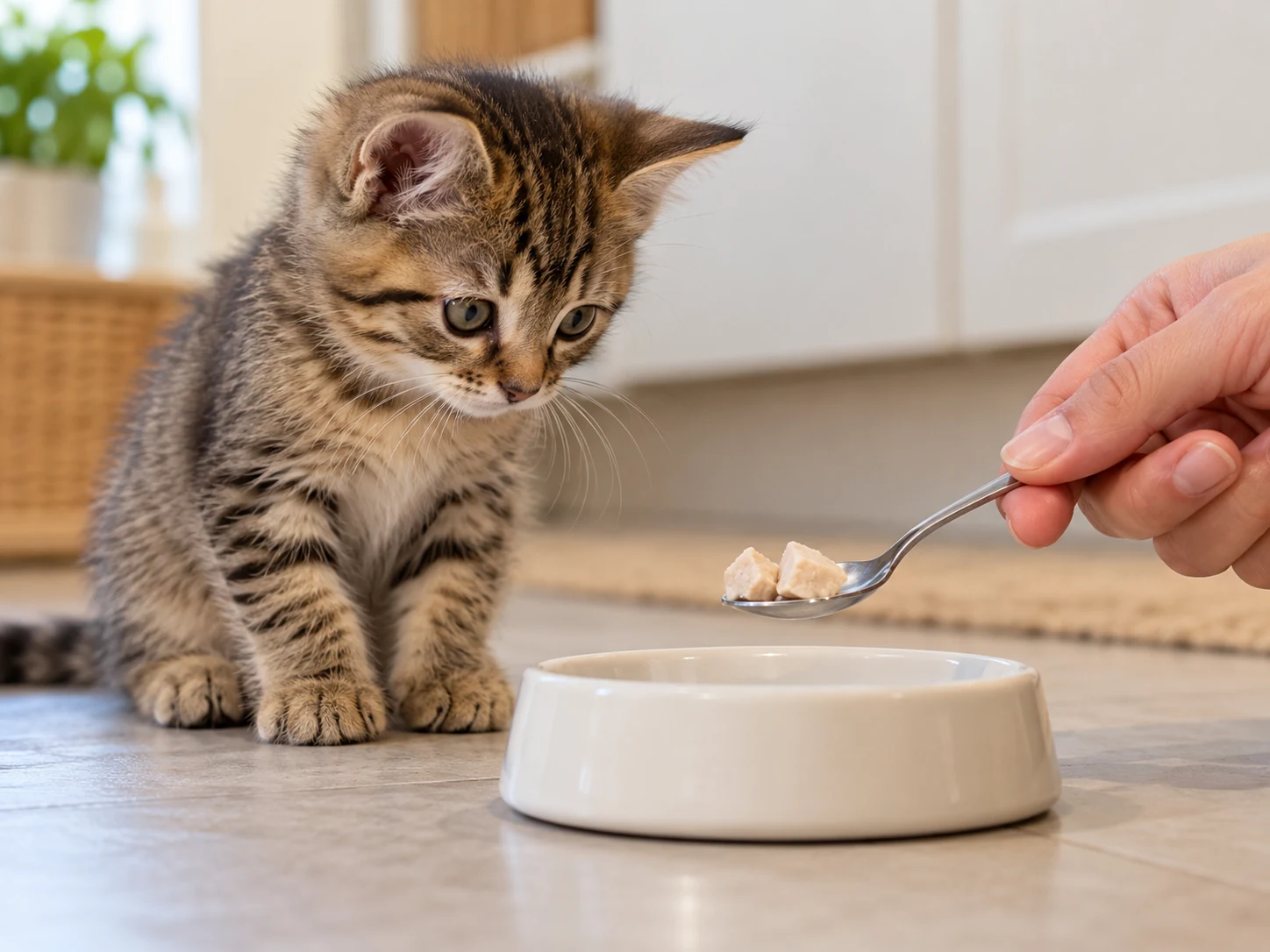
Use the product’s calorie information to measure the portion.
HYPOTHETICAL EXAMPLE
ALLOWANCE
ALREADY USED
REMAINING
| Step | Example value | How to use it |
|---|---|---|
| Daily feeding plan | 200 kcal/day | An assumed total for this example; use your kitten’s own plan. |
| Chosen treat allowance | 10 kcal/day | 5% of the example total; this is not a prescribed amount. |
| Other treats already used | 4 kcal | 10 – 4 = 6 kcal remain for this product. |
| Example packet energy | 4,000 kcal/kg = 4 kcal/g | Convert kcal/kg to kcal/g by dividing by 1,000. |
| Remaining portion | 6 ÷ 4 = 1.5 g | An example calculation, not a feeding recommendation. |
Use your own numbers. This table is arithmetic only. It does not represent a BSG product specification or a recommended daily intake. If the label gives kcal per piece, divide the remaining calories by that value instead.
06 / A SIMPLE FEEDING SEQUENCE
How to Introduce Freeze-Dried Kitten Treats
Once you have checked the product and feeding allowance, start with a small portion of one new treat. VCA recommends introducing new treats slowly, one at a time.
Keep your kitten’s usual food available. Watch how comfortably it handles the treat, then note its appetite and digestive response. Offer the treat as a small reward alongside your kitten’s regular meals.
Follow the label’s piece-size instructions. Rehydrate only when directed.
Let your kitten eat at its own pace. Do not encourage it to swallow a large piece.
Note the product and amount. Stop offering the new treat and contact your veterinarian if your kitten vomits, has diarrhea, or has a reduced appetite.
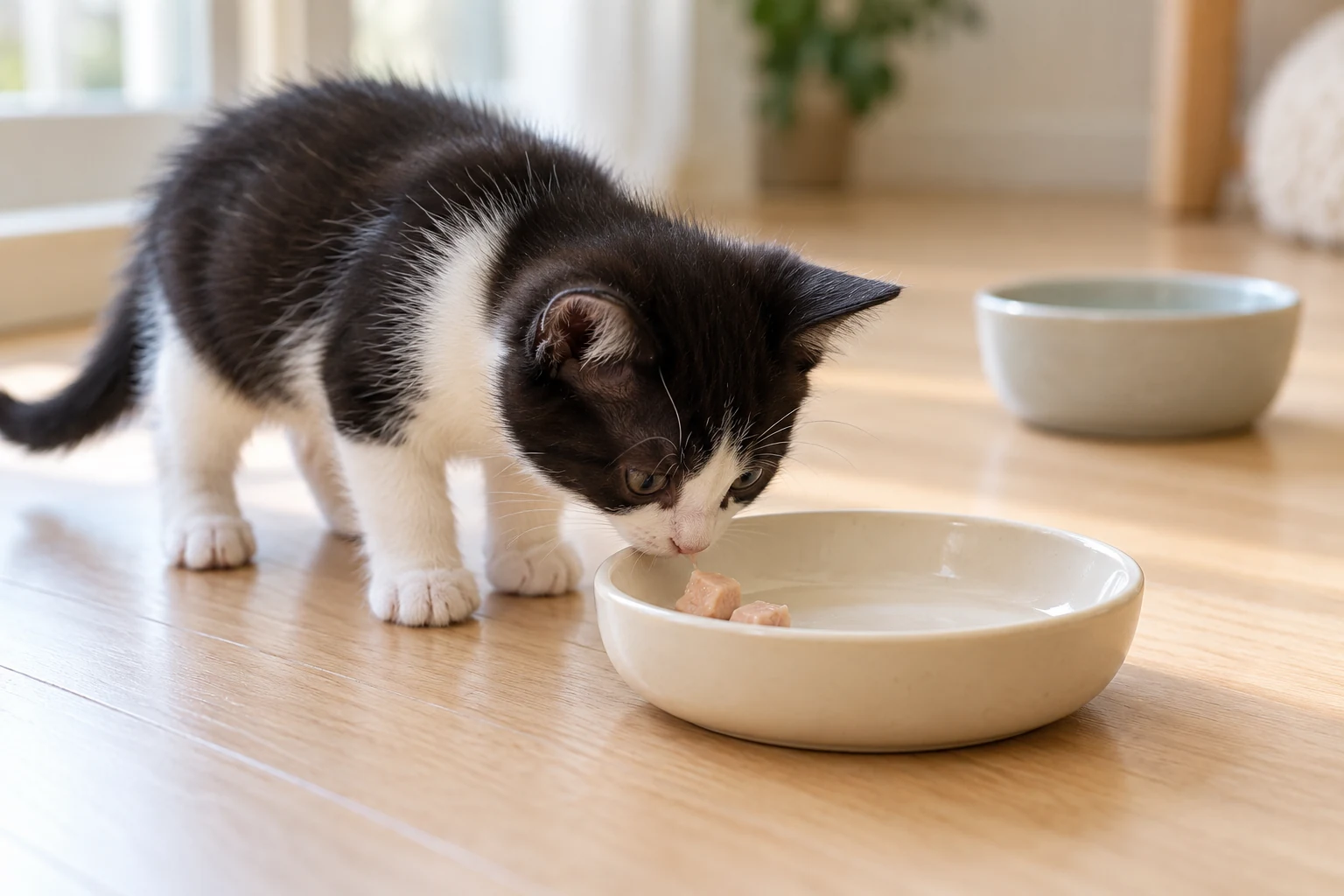
Watch how comfortably your kitten eats and monitor its appetite during the introduction.
07 / THE STORAGE NOTE
Store and Handle Treats Carefully
Follow the package’s storage directions, keep the original label and lot code, and use clean hands and utensils. Check for recalls before feeding, and do not use a recalled product.
If the label recommends rehydration, prepare only the amount you will use and follow its timing and storage instructions. Do not return moistened pieces to the dry bag. Clean bowls after use.
Retain the product name, lot code, date, and feeding directions.
Follow the stated storage conditions and keep the seal intact.
Wash hands and clean the feeding bowl and utensils after use.
08 / FOR YOUR PRODUCT BRIEF
For Brands Developing Kitten Treats
A kitten treat brief needs more than a flavor name. Define the intended age group, cooking process, piece size, calorie declaration, and feeding directions before planning the range.
Ask for documented process controls and the evidence behind any kitten-specific claim. Review the label for your target market. Palatability feedback alone does not establish nutritional completeness or food safety.
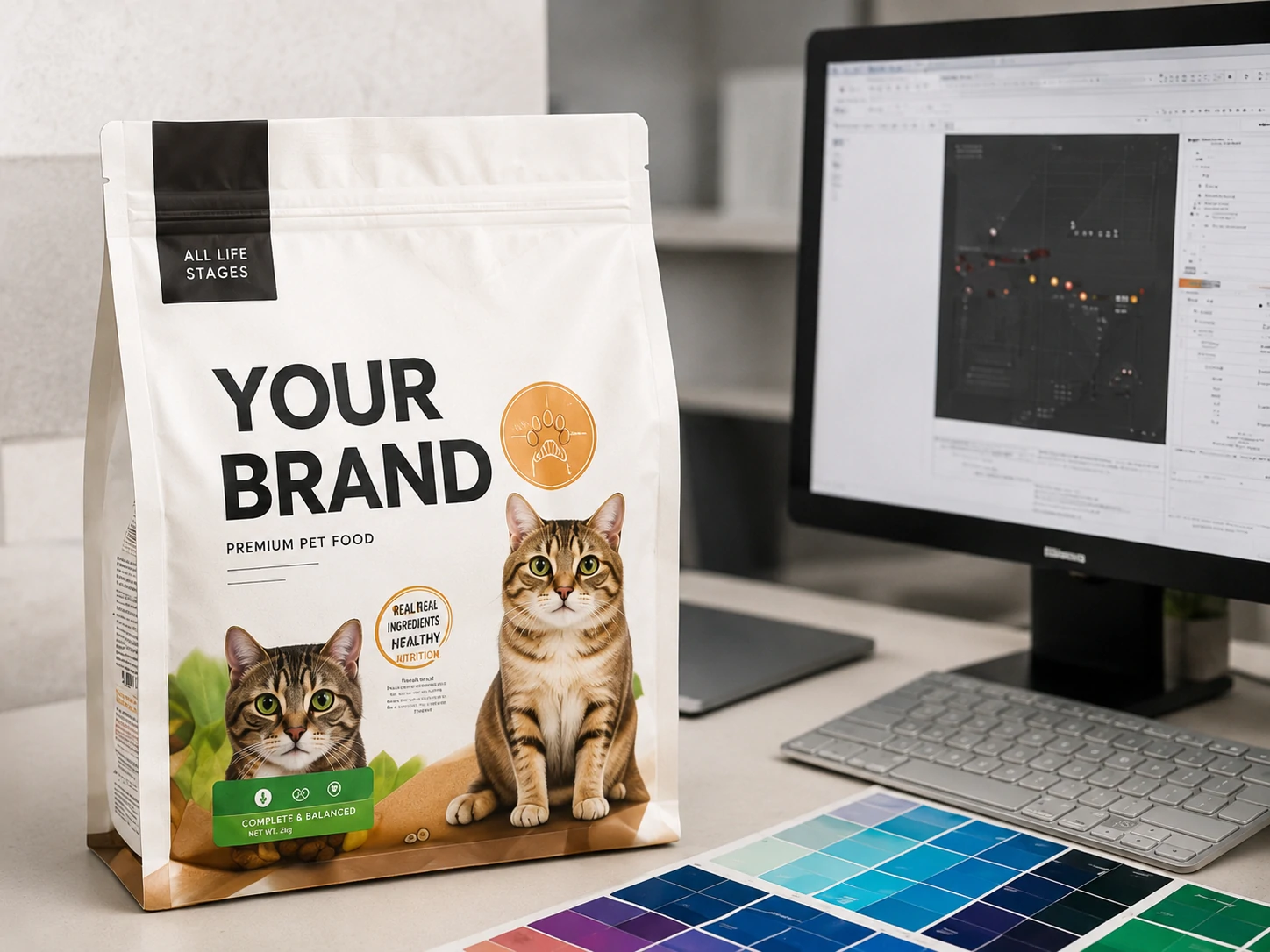
Build the product brief and packaging information together.
Specify the intended kitten group, ingredients, preparation, and piece format.
Plan the calorie information, serving guidance, storage instructions, and traceability.
Request the supporting specifications and validation for each product claim.
Explore BSG’s cat food range or contact our OEM/ODM team to discuss a kitten treat brief, sample requirements, and packaging.
Sources and Further Reading
LAST QUESTIONS
Freeze-Dried Cat Treats for Kittens: FAQ
Still wondering about age, softening, or daily rewards? These answers address common questions about feeding freeze-dried treats to kittens.
At what age can a kitten try freeze-dried treats?
Wait until your kitten is fully weaned and comfortably eating complete kitten food. Then follow the product’s minimum-age instructions and your veterinarian’s advice. No single age cutoff applies to every kitten or product.
Should I soak freeze-dried treats before feeding them?
Follow the product’s directions. If rehydration is recommended, prepare only the portion you will use and follow the stated timing and storage instructions. Adding water does not make a raw product safe.
Can kittens eat freeze-dried treats every day?
They may fit into some kittens’ feeding plans, but they are optional. Keep all treats within the agreed calorie budget, offer manageable pieces, and make sure your kitten eats enough complete kitten food. Use play or praise for additional rewards.
RELATED PRODUCTS
Explore Products for Your Kitten’s Feeding Plan
Keep a complete growth-stage diet at the center of your kitten’s feeding plan. These BSG products connect the article’s treat checklist with everyday food choices.
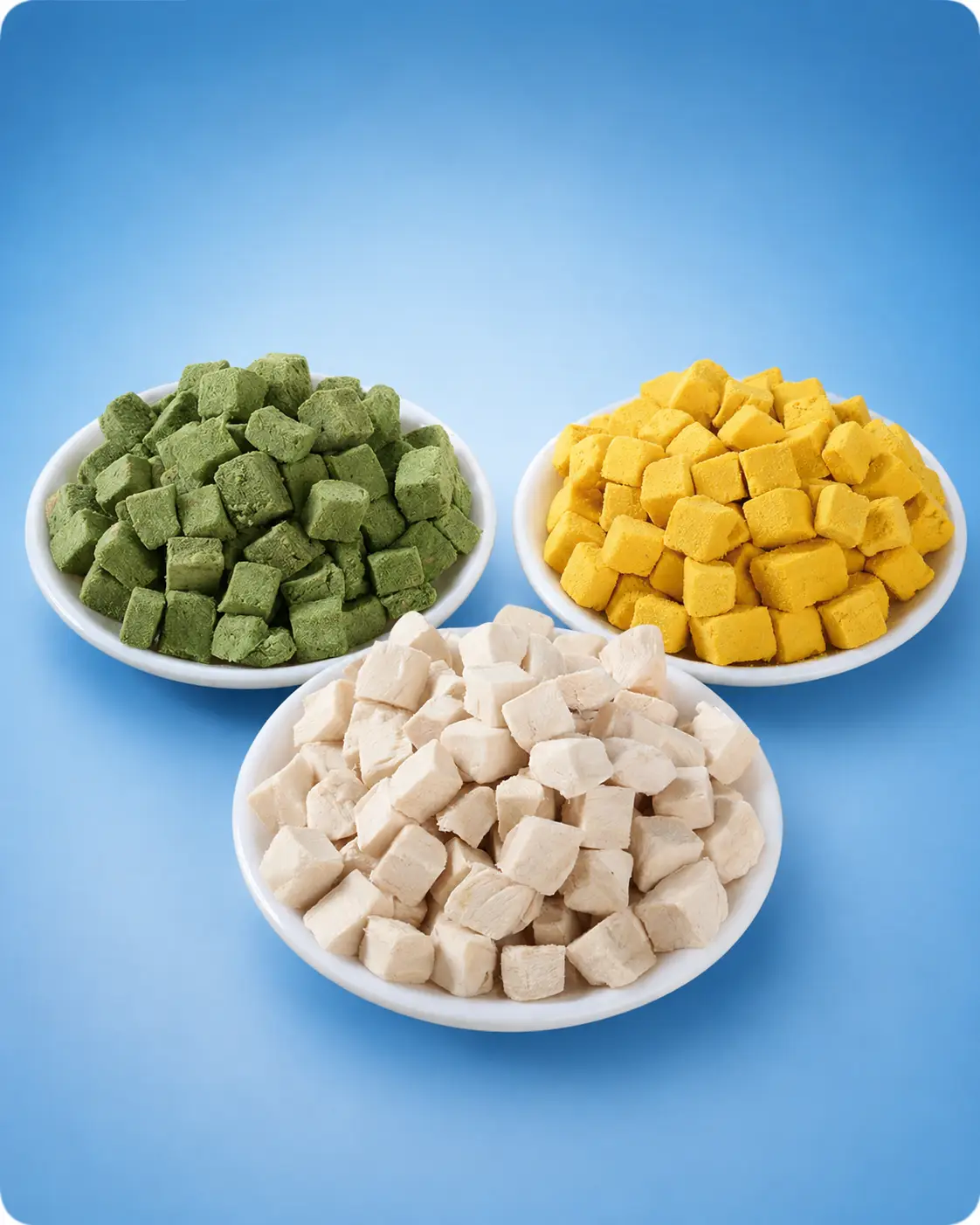
Treat range · Confirm kitten suitability
Explore BSG’s freeze-dried treat range for cats and dogs, with options for custom shapes, flavors, and packaging.
Before feeding a kitten: confirm the minimum age, whether the meat is cooked, piece size, and calories per gram with BSG.
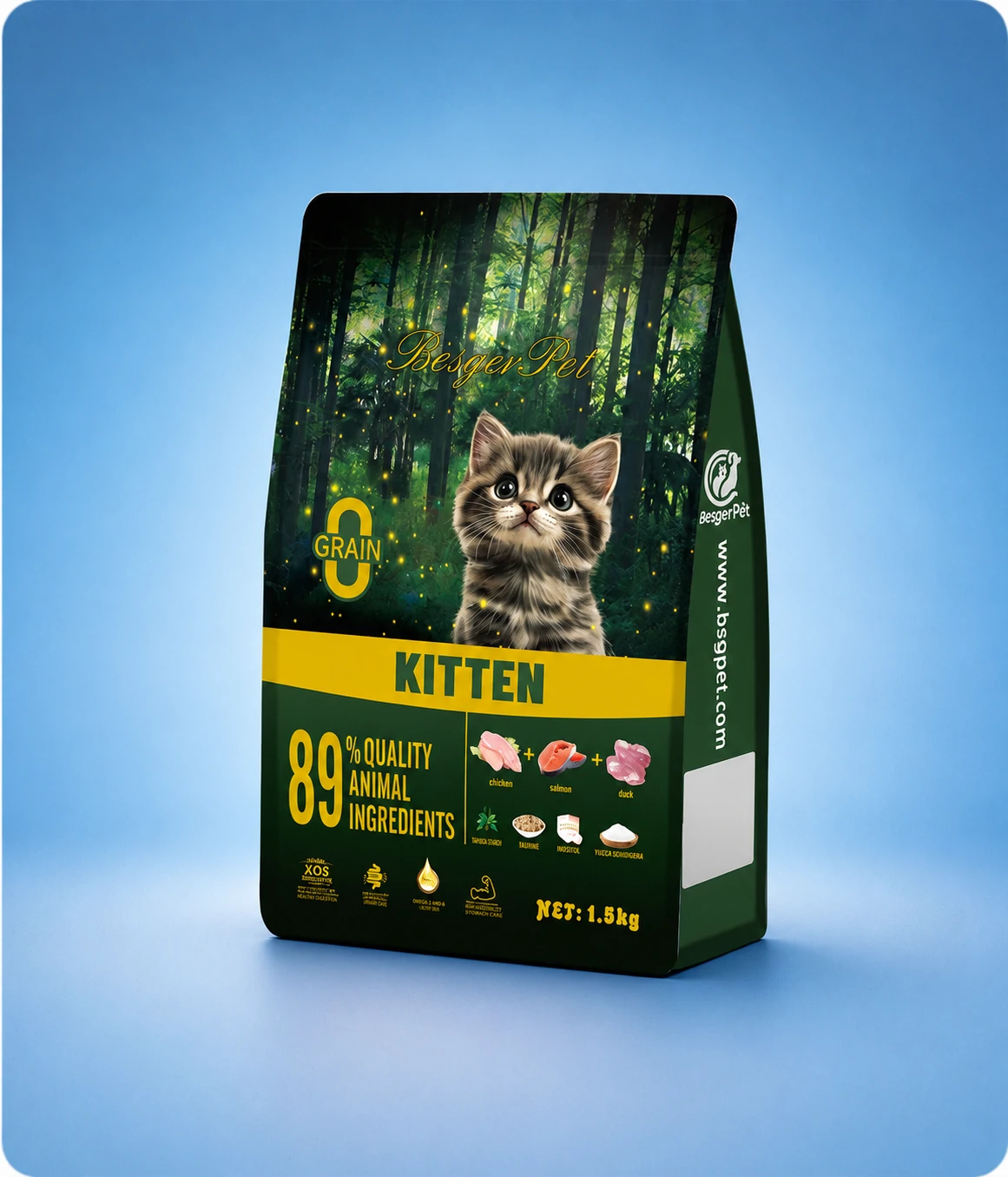
Main-diet option · Kitten life stage
BSG lists this dry food for the kitten life stage. It is a main-diet option to explore alongside an occasional, suitable treat.
Before choosing a formula: check that the final package’s nutritional adequacy statement covers growth. Follow its age-specific feeding directions.