
How Is Canned Cat Food Made? A Factory Process Guide
How is canned cat food made? Manufacturers prepare ingredients according to a recipe, fill and seal the cans, then heat-process them in a retort before cooling and final quality checks. Together, these stages create the intended texture and make the unopened product shelf stable.
This guide explains how canned cat food is made using a typical retort process and highlights questions to ask when comparing manufacturers and OEM options.
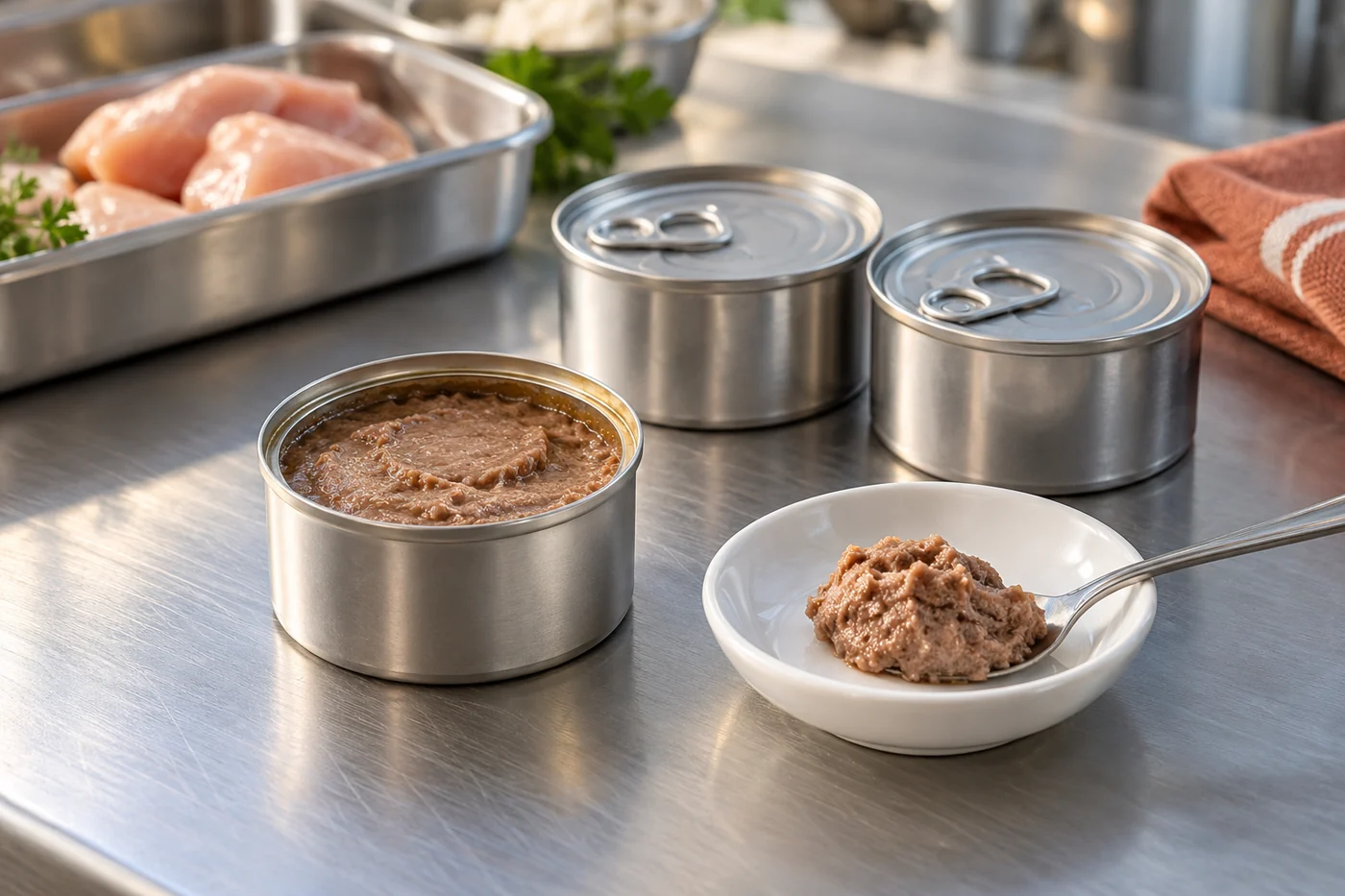
How is canned cat food made? The process at a glance
The sequence below follows the general wet food manufacturing process described in GAPFA’s 2026 manufacturing overview. Recipes and equipment vary. Quality checks take place throughout production.
1. Check and prepare canned cat food ingredients
Production starts with a defined recipe and ingredient specifications. Depending on the formula, ingredients may include meat, poultry, fish, organs, water, oils, and vitamin and mineral premixes. The recipe specifies ingredient quantities and the intended feeding role.
For a complete food, formulators select nutrient targets for the intended life stage and destination market. They account for nutrient losses during processing and storage and gather evidence to support the nutritional adequacy claim. FEDIAF’s 2025 nutritional guidelines recommend using chemical analysis to validate each finished product. The FAQ below explains the evidence required for a US ‘complete and balanced’ claim.
Incoming materials are checked against supplier and factory requirements. Controls can include delivery temperatures, packaging condition, supplier documents, and tests selected for the ingredient’s risks. Fresh or frozen materials are then handled and stored according to the plant’s procedures.
Before mixing, operators weigh the batch ingredients and record the ingredients and quantities used. Preparation may include cutting, mincing, or handling frozen ingredients as the recipe requires. These steps make the next stage more consistent.
The Pet Food Institute’s manufacturing overview describes supplier controls and checks during ingredient receiving.
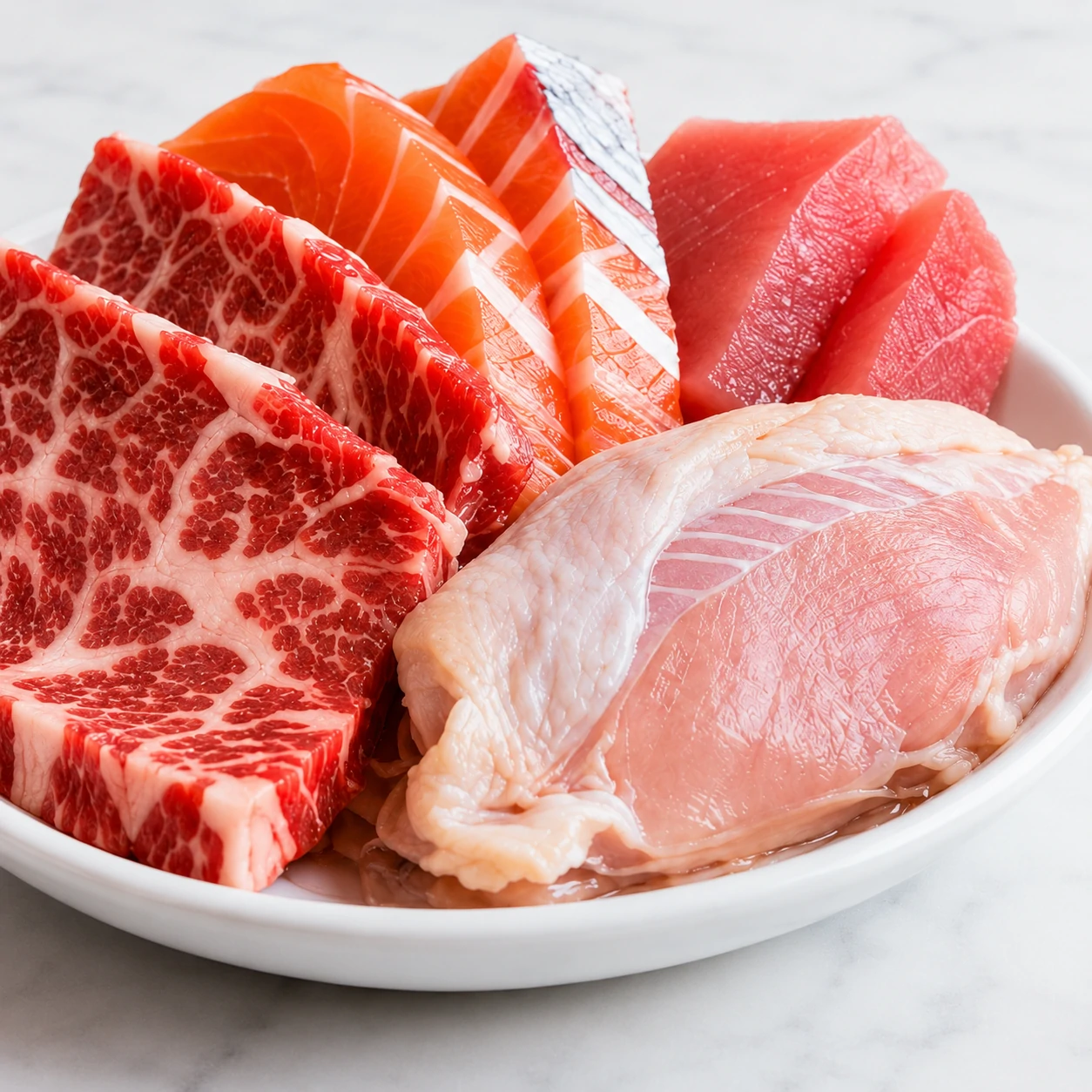
2. Mix the recipe and develop the texture
The prepared ingredients are blended to distribute them evenly. Water and other specified liquids help create the intended consistency. Particle size and mixing conditions vary with the product format.
Preparation methods vary with the intended texture:
| Format | Typical preparation |
|---|---|
| Paté or loaf | Finely minced ingredients are blended into a relatively uniform mixture. |
| Chunks in gravy or jelly | Pieces may be cut from meat or formed from a blended mixture. They are then combined with the specified liquid. |
| Shredded styles | Prepared pieces of meat or fish retain a visible structure before being combined with the other ingredients. |
FEDIAF describes these wet-food preparation methods, including minced mixtures, formed pieces, and gravy or jelly components. Some recipes use pieces that are formed or precooked before filling. Later heating can thicken the gravy or help form a jelly, so both preparation and cooking affect the final texture.
Consistency also matters during processing. A change in the mixture can affect how it fills the can and how heat moves through it. The approved recipe and process therefore need to work together.
3. Fill the cans and form the seal
The mixture is portioned into suitable cans under controlled filling conditions. Operators check the fill weight and headspace against the specification. Headspace is the gap between the food and the lid. Any air-removal step follows the requirements of the process.
For common metal food cans, a seaming machine joins the lid and can body to form a double seam. This closure must remain intact through heat processing, handling, and storage.
Closure checks include visual inspections and, on selected samples, seam measurements or teardowns. During a teardown, the seam of a sample can is opened for detailed examination. US container-control rules for low-acid canned foods describe this combination of inspections and records.

4. Heat-process canned cat food in a retort
The sealed cans enter a retort, an industrial vessel used for controlled heat processing. This stage is often called retort sterilization. Operators follow the established thermal process and record time, temperature, and any other critical factors specified for the run.
The required thermal process depends on the recipe and container. Can dimensions, fill conditions, consistency, and other critical factors can affect heating. US rules for low-acid canned foods call for scheduled processes established by qualified thermal-processing specialists.
No single processing temperature or time applies to every canned cat food. The manufacturer needs a scientifically established process suited to the recipe, container, and filling conditions. Batch-release checks confirm whether production met those conditions; they do not replace process establishment.
What commercial sterility means
The goal is commercial sterility. After heat processing, the food must be free of viable microbes, including spores, that pose a public health risk. It must also be free of microbes capable of multiplying under normal unrefrigerated storage and distribution. Commercial sterility differs from absolute sterility, which means the absence of all viable microorganisms and spores. Maintaining commercial sterility also depends on the sealed package remaining intact.
5. Cool the cans and check the packaging
After heat processing, the cans are cooled under the conditions specified for the process. Cooling water and handling equipment need appropriate controls to protect the container and its closure.
Packaging checks confirm that the cans have the correct labels or printing and that batch and date codes are readable. Label information, carton details, and the product inside must match. After cooling and packaging checks, cans move into storage pending release. Cans are dispatched only after the required records and results have been reviewed and the batch has been authorized for release.
The batch code provides a way to connect a finished can with its production records. Careful handling also helps protect the closure after the thermal process is complete.
6. Review canned cat food quality checks before batch release
Quality control runs from ingredient receiving through finished packaging. Before release, the factory reviews the relevant production records and results against the agreed specification.
These checks serve different purposes. Process establishment provides the scientific basis for the recipe and package. Batch records show whether each production run met the established conditions. Finished-product tests provide supplementary verification. Satisfactory test results from a small sample of cans cannot prove that the entire batch received adequate heat treatment.
Validating nutritional adequacy, periodically checking nutrient levels, and conducting routine batch checks serve different purposes and follow different schedules. The validation and control plans specify which tests to run and how often to run them. Common control areas include:
What the quality records show
| Control area | What is reviewed |
|---|---|
| Ingredients and batch recipe | Material identity, receiving checks, and recorded quantities. |
| Filling and closure | Specified fill conditions, package condition, and seam inspection results. |
| Thermal processing | Recorded values for critical factors checked against the scheduled requirements, together with documented resolution of any deviations. |
| Finished food | Texture, appearance, and any microbiological tests specified in the control plan. |
| Nutrition and labeling | Evidence of nutritional adequacy, nutrient tests scheduled by the control plan, label accuracy, and product identification. |
| Traceability | Batch codes and records connecting production with distribution. |
How processing deviations are handled
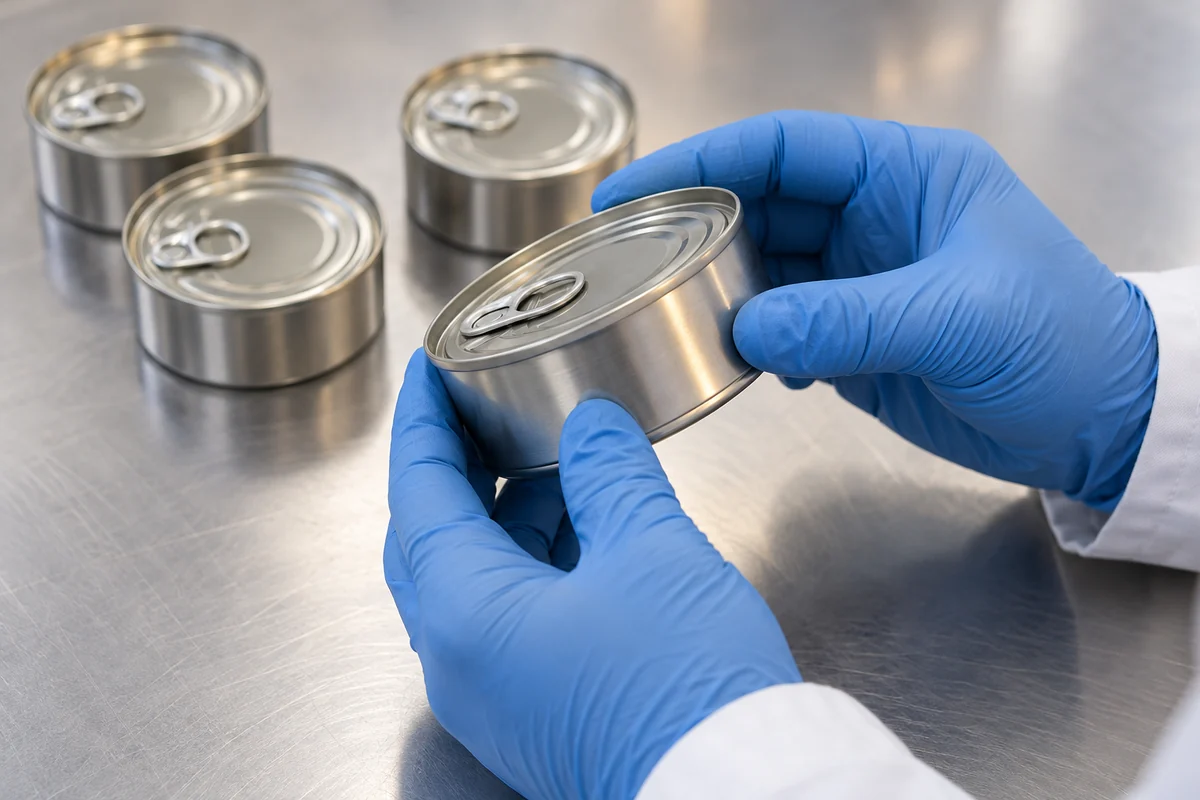
The Pet Food Institute outlines these manufacturing and packaging checks. For thermally processed low-acid foods, US production-record rules also describe reviewing process records before shipment or release.
If a run falls short of the scheduled process or a critical factor goes out of control, place the affected product on hold.
US rules on processing deviations require the affected product either to be fully reprocessed or to be set aside for evaluation by a competent processing authority. Document the evaluation and any corrective action taken. The product may be released only after full reprocessing achieves commercial sterility or the assessment confirms no significant public health hazard. If neither condition is met, the affected product must be destroyed.
For a buyer, the useful question is how the supplier documents those controls for the proposed product. Ask which records and test results can be provided as part of sample approval and ongoing supply.
Common questions about canned cat food manufacturing
Can the same retort process be used for every can size?
Changing the can size can affect how the food heats. A qualified specialist needs to determine whether the established process covers the proposed package or requires revision. Confirm this when changing can dimensions, fill conditions, or the recipe.
Are all canned cat foods complete meals?
The feeding role depends on the formula and label. A product may be intended as a complete diet, a complementary food, or a treat. US ‘complete and balanced’ claims require evidence that the food meets the relevant AAFCO nutrient profile or has passed a feeding trial using AAFCO procedures. The FDA explains nutritional adequacy statements. Confirm the intended life stage and feeding directions for the specific product.
How can a buyer check batch traceability?
Ask the supplier to explain an example batch code and show how it links to ingredient records, the processing run, inspection results, and distribution records. This gives you a practical way to discuss traceability before placing an order.
Turn the manufacturing process into an OEM brief
Understanding how canned cat food is made helps you ask more useful questions before ordering. For a private label project, define the food, packaging, control plan, and intended market together.
- Feeding role and market: complete or complementary food, intended life stage, and destination country.
- Recipe and texture: proposed ingredients and the intended format: paté, chunks, or shreds.
- Packaging: fill weight, can dimensions, lid type, label language, and carton requirements.
- Quality evidence: the basis for the thermal process, closure checks, batch-release criteria, and records available to buyers.
- Order brief: sample requirements, expected volume, and requested delivery schedule.
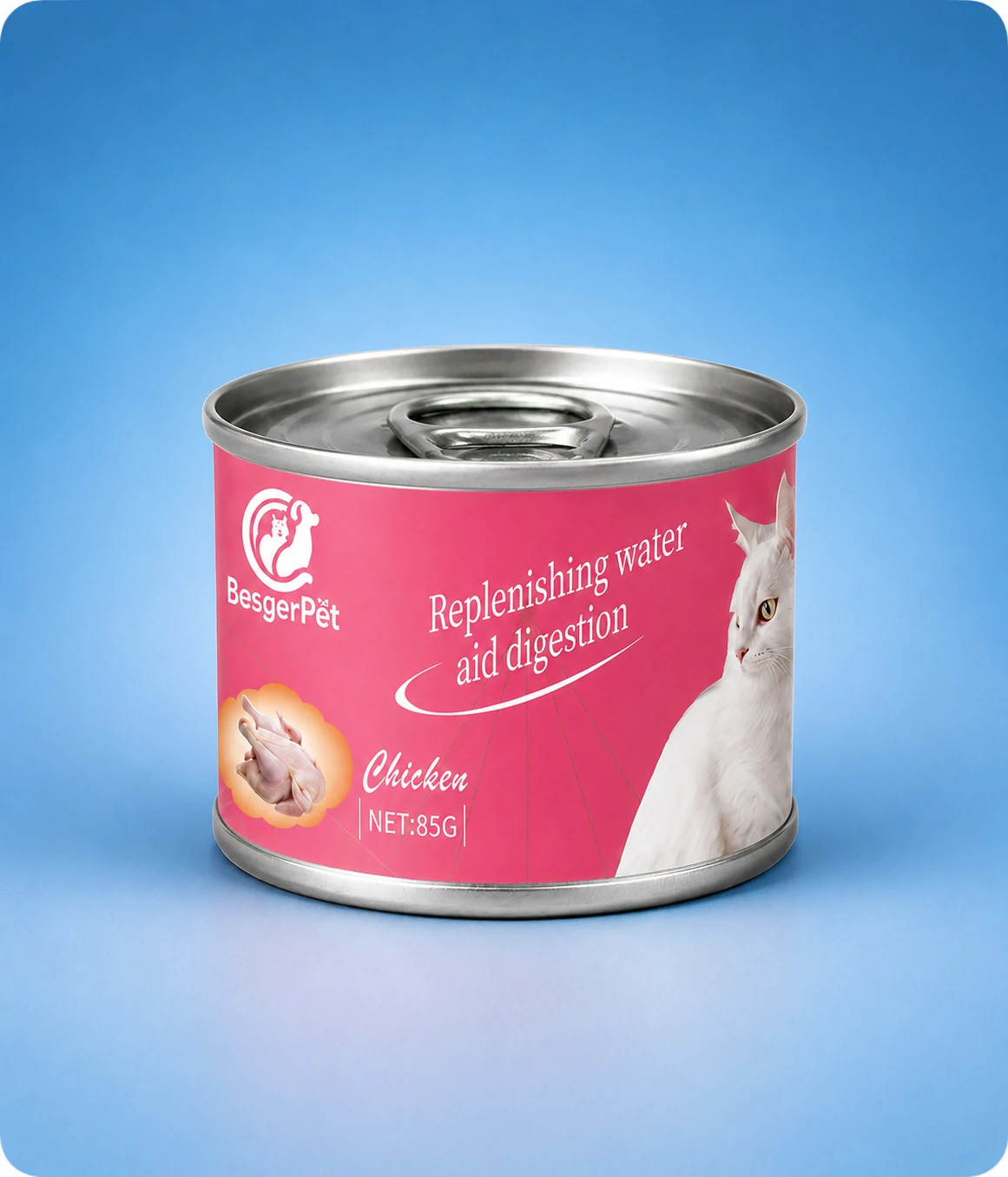
Explore our canned cat food OEM options as a starting point for product discussions. Our OEM/ODM development process covers formula discussions, sampling, and packaging development. Share your brief so we can review the proposed formula, packaging, and supporting specifications together.
Sources and further reading
- GAPFA: How Pet Food Is Made (2026)
- FEDIAF: How wet pet food is made
- Pet Food Institute: How Pet Food Is Made
- 21 CFR 113.3: Definitions
- 21 CFR 113.60: Containers, cooling, and coding
- 21 CFR 113.83: Establishing scheduled processes
- 21 CFR 113.100: Processing and production records
- 21 CFR 113.89: Processing deviations and disposition
- FEDIAF: Nutritional Guidelines (2025)
- AAFCO: Nutrient-profile background (2014 appendix)
- FDA: Complete and balanced pet food