

This pate vs shredded cat foodcomparison helps you choose a suitable recipe your cat can eat comfortably and finish reliably. Some cats leave smooth food untouched; others lick up the gravy but leave most of the meat behind.
First check whether a recipe meets your cat’s nutritional needs. Then consider its texture and how much your cat actually eats. This guide explains the differences between the two styles, what labels cannot tell you, and how to try a new texture.
Pate vs shredded cat food: look past the name
Pâté
Ingredients are ground and blended into a fairly uniform mixture. Some recipes are soft and creamy; others are firm enough to slice. You can break a portion into small pieces or mash it in a shallow dish.
Shredded
Thin strips are served in broth, gravy, or another moist base. Strip length, softness, and the amount of liquid vary by recipe. A cat may eat the whole mixture or separate the liquid from the solids.
Two foods called “chicken” can differ in ingredients, aroma, fat content, and texture. Likewise, “pâté” does not promise a mousse-like consistency. Compare the actual food and full label, especially if your cat accepts only a narrow range of textures.
| Compare | Pâté | Shredded |
|---|---|---|
| Mouthfeel | A fairly uniform mixture; firmness varies | Separate strands with a liquid component |
| Serving | Spoon out, break up, or mash the chosen portion | Stir gently to distribute the pieces and liquid evenly |
| Leftovers | Watch for an untouched mound or dried surface | Check whether most strands remain after the gravy is gone |
| Nutrition | Depends on the recipe and feeding purpose | Depends on the recipe and feeding purpose |
Pate vs shredded cat food: nutrition and portions
Texture alone does not tell you how nutritious a food is. Start with three label checks, then use each recipe’s calorie content to compare serving sizes.
- Feeding purposeComplete or supplemental?
For a regular main meal, confirm that the product is a complete food. In the U.S., check the nutritional adequacy statement. Treats, toppers, and supplemental foods have a different role in the diet.
- Life stageSuitable for your cat?
Check which life stage the recipe is formulated for, such as kitten growth or adult maintenance. A soft texture alone does not make an adult food suitable for a growing kitten.
- Recipe detailsWhat does the label say?
Review ingredients, nutrient information, and calories together. The amount of visible broth does not tell you the food’s total moisture content. Protein percentages on labels can also vary because of differences in water content.
The FDA’s food-label guideexplains nutritional adequacy and dry-matter comparisons. Ask the manufacturer for typical nutrient data when needed.
Pate vs shredded cat food: what your cat actually eats
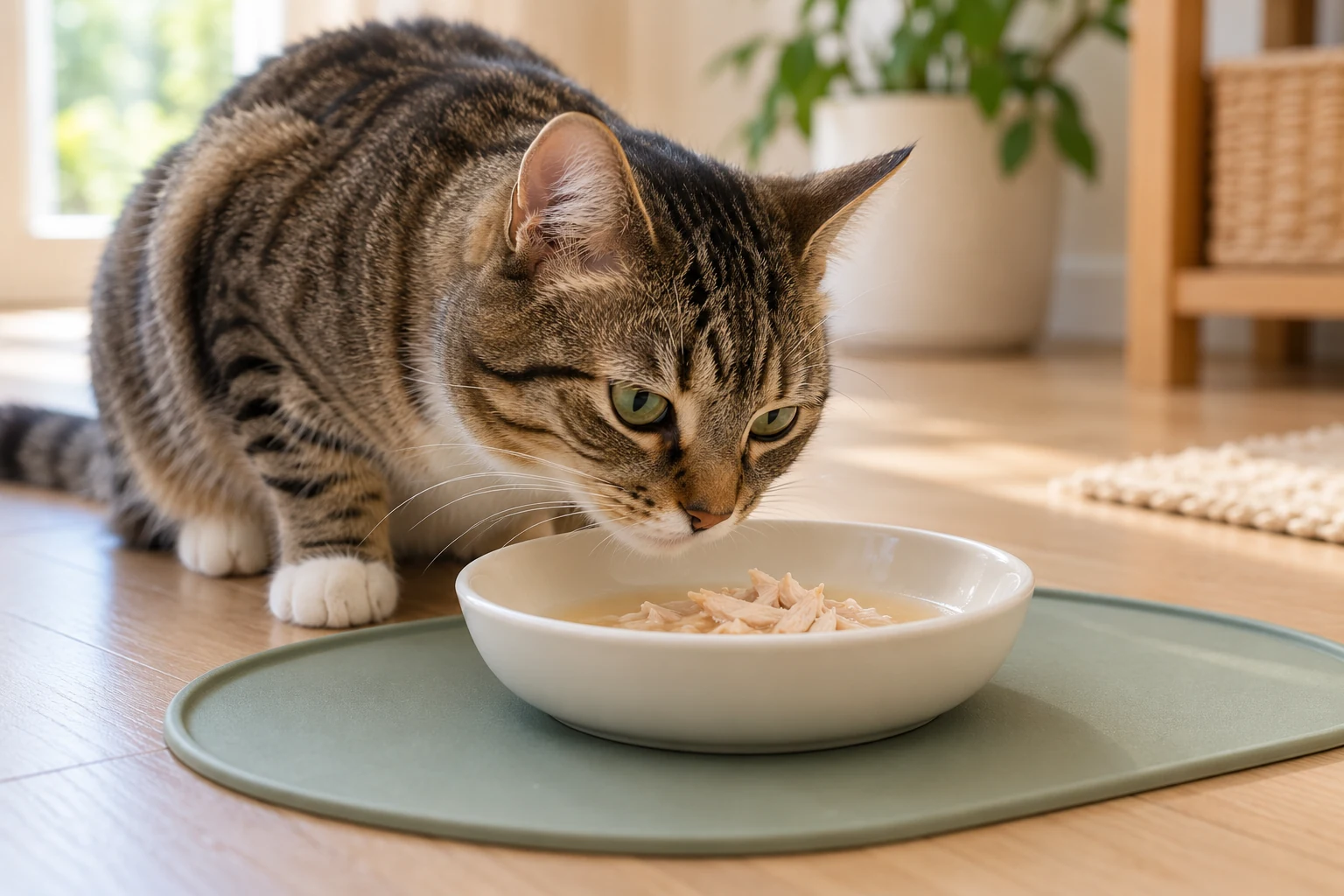
- Regularly finishes smooth food
- Start with a nutritionally suitable pâté. Check its firmness after serving; a dense block and a loose mash offer different experiences.
- Eats strands as well as gravy
- Shreds may suit your cat’s established preference. Over several meals, check whether your cat comfortably eats the pieces and finishes the planned portion.
- Licks the liquid; leaves the pieces
- Try a suitable smoother recipe or a different strand size. Record how much solid food remains, even when all the gravy is gone.
How to try pâté or shredded food
If your cat likes chicken pâté, try a suitable shredded chicken recipe before changing the flavor as well. The recipes may still differ in other ways, so you cannot assess texture alone.
- Prepare a small trial
Offer a small portion of the new food in a separate dish beside the familiar meal. Use clean dishes and keep the usual feeding place and routine.
- Follow your cat’s pace
Introduce the new recipe gradually. Monitor how much your cat eats and note any digestive changes. Never withhold familiar food to force acceptance.
- Review several meals
Review how much was eaten and whether your cat appeared comfortable. Recheck calories before increasing the proportion of new food.
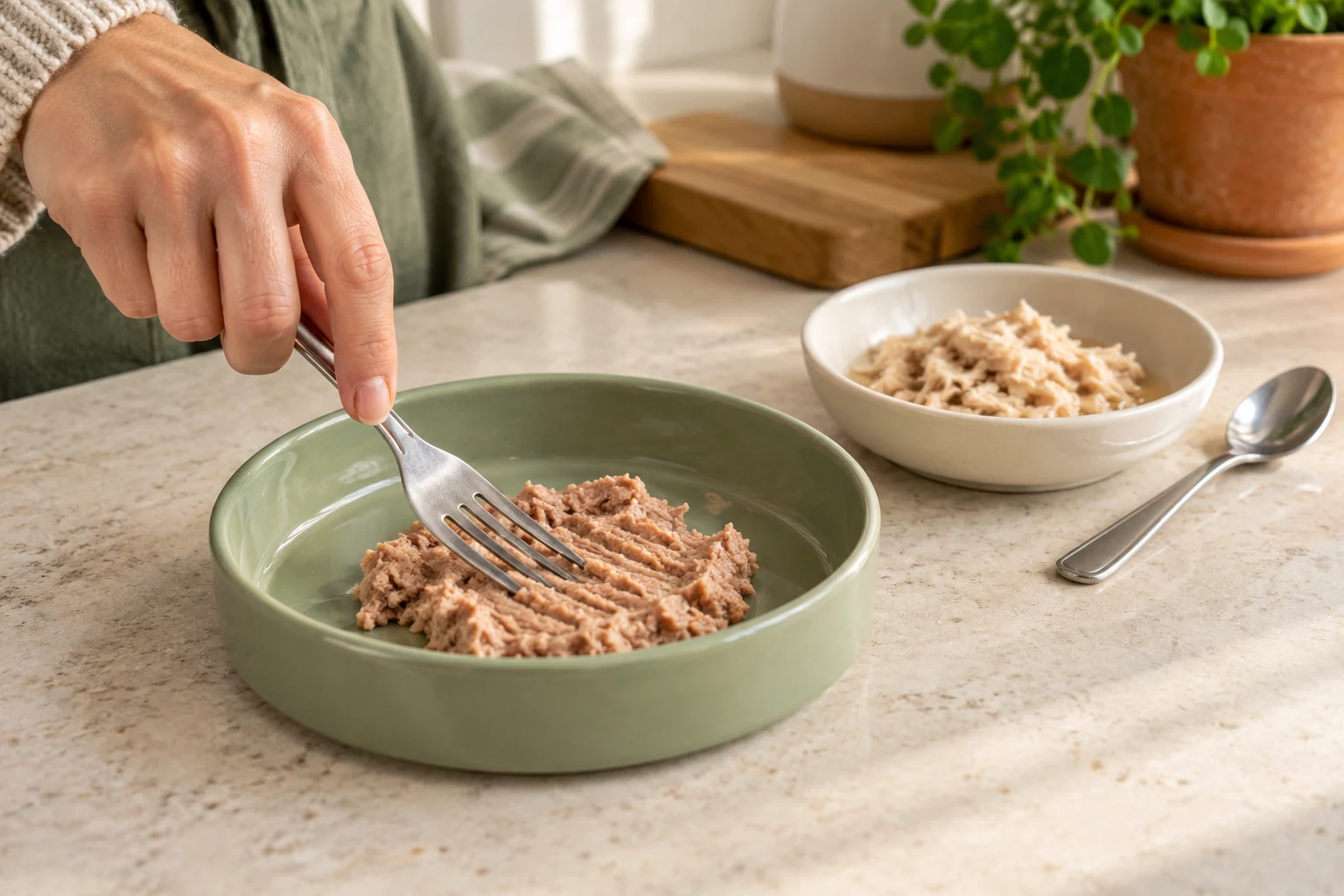
International Cat Care’s transition guidancesupports a gradual change at the cat’s pace. Follow your veterinarian’s instructions for a prescribed diet.
Cover and refrigerate unused portions of opened wet food according to the product’s directions. Packaging affects portioning and storage; ourpouches vs. cans guidecompares that separate decision.
Pate vs shredded cat food: common questions
Clear answers on nutrition, digestion, mixed feeding, and what to buy first.
NutritionIs shredded cat food healthier than pâté?
Neither texture is automatically healthier.Visible strands do not prove better nutrition. Compare each recipe’s nutritional adequacy statement, intended life stage, and nutrient information. Either format can serve as a main meal when the product is complete and suitable for your cat.
DigestionIs pâté easier to digest than shredded food?
The texture name cannot tell you.A smooth consistency does not show that a recipe is more digestible or suitable for a sensitive stomach. Ask the manufacturer for information about the specific recipe. If your cat has persistent digestive problems, ask your veterinarian about an appropriate diet.
PreferenceWhich texture should I try first for a picky cat?
Start with what your cat already accepts.If familiar meals are smooth, try a suitable pâté first; if your cat eats pieces as well as liquid, shreds are worth testing. Offer a small trial portion alongside familiar food. Check how much your cat eats; sniffing the bowl or licking the gravy does not show that the full meal was eaten.
Mixed feedingCan I feed pâté and shredded food on the same day?
Yes, provided both recipes are suitable for your cat and the combined portions fit the feeding plan.For main meals, choose suitable complete foods and count dry food and treats toward the daily calorie total. Introduce unfamiliar recipes gradually. Check with your veterinarian before changing a prescribed diet.
BuyingHow much should I buy before choosing one texture?
Buy a small quantity of the specific recipe you want to try.Check acceptance over several meals before buying a case. Reorder when your cat reliably eats an appropriate portion and you can manage any leftovers. Your cat’s response may vary between flavors and recipes within the same range.
Wet cat food options from BSG
Use these product pages to compare available textures. Ask for the selected recipe’s label and calorie content, and confirm whether it is a complete or supplemental food. The product examples below are separate from the illustrative feeding photographs above.
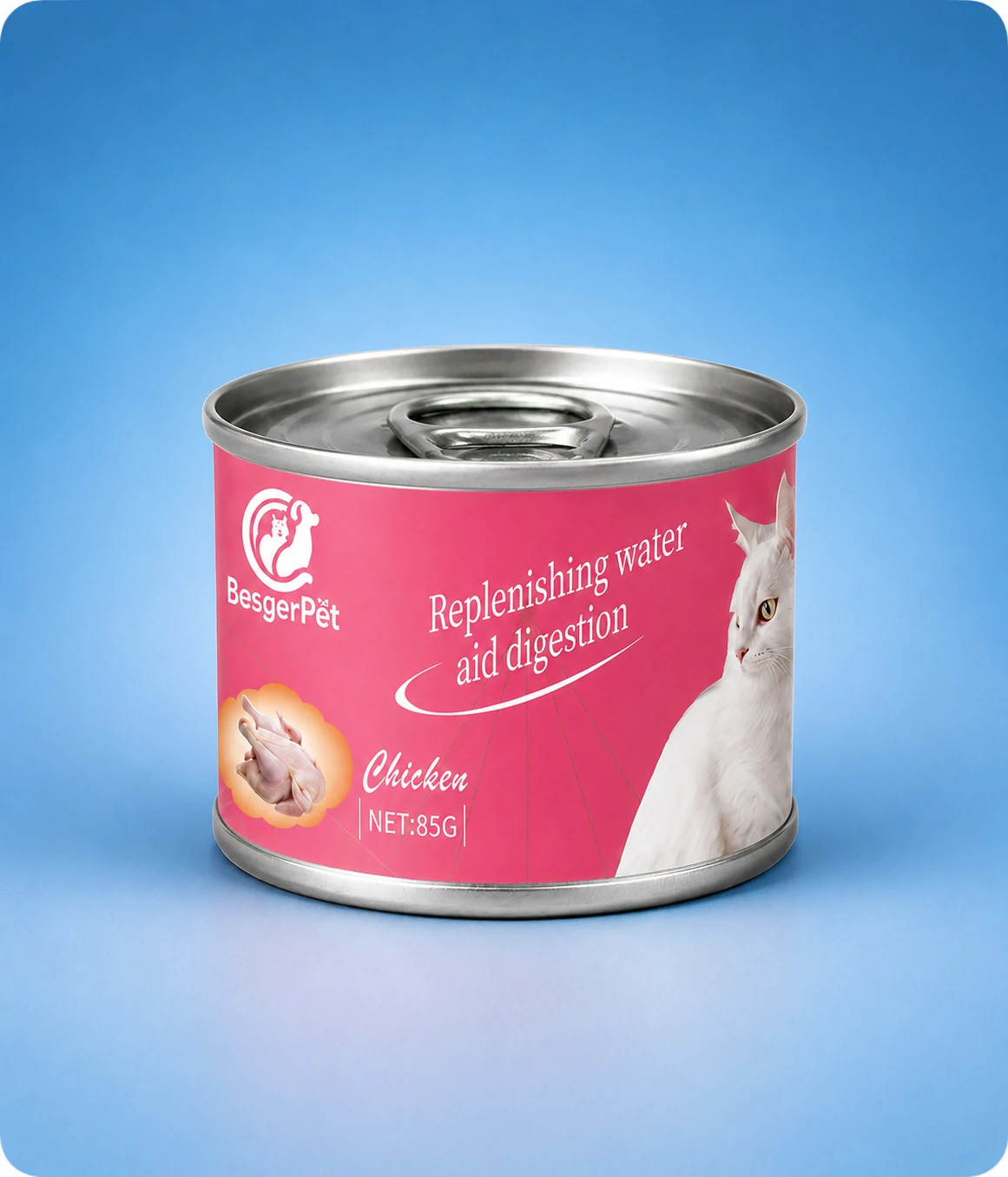
85 g canned cat food
The range lists minced, shredded, and jelly styles. Confirm the selected texture with a sample; “minced” alone does not guarantee a smooth pâté texture.
Explore canned cat food
Cat food pouches
Compare shredded, minced, and piece-style options. Check whether the chosen recipe is complete or supplemental, then review the feeding directions to decide how it fits your cat’s feeding plan.
Explore cat food pouches