
MULTI-CAT LIVING
How to Stop Your Cat from Stealing Other Cats' Food
A cat stealing other cats’ food can turn a simple meal into a daily chase. One bowl ends up empty, another cat walks away, and it becomes difficult to know who ate what.
Start with separate feeding spaces, individually measured portions and protected access to each meal. Then adjust the routine for the fast eater, the grazer or the cat on a different diet. The goal is a reliable routine that lets every cat eat its own food.
READ THE PATTERN
Why Is My Cat Stealing Other Cats' Food?
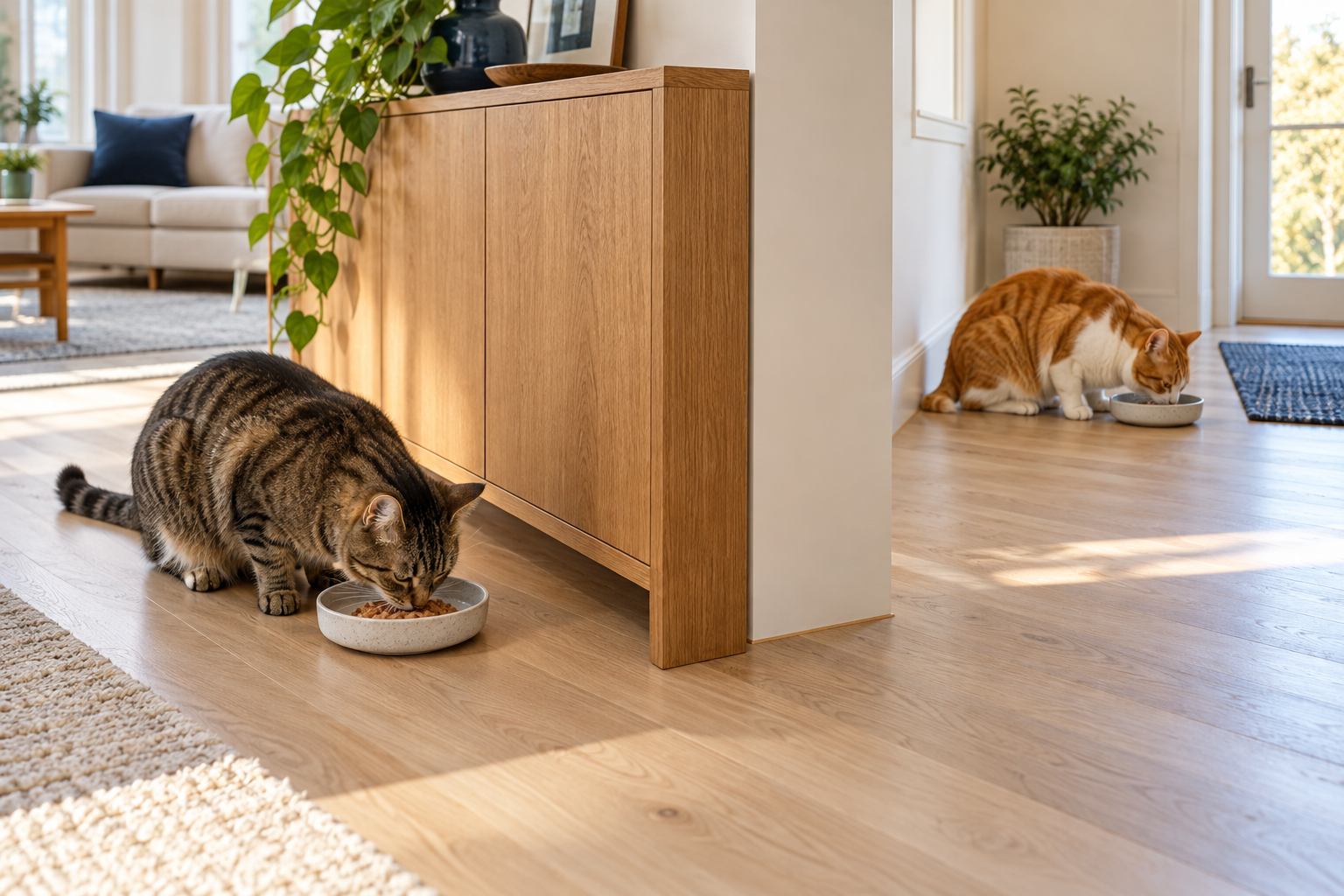
Observe a typical mealtime before changing your feeding routine. Note who starts first, who finishes first and what happens when one cat approaches another cat’s bowl.
Competition for food can be subtle. Cat Friendly Homes’ guidance on intercat tension describes blocking, staring and avoidance around shared resources. These observations help you choose the first change.
WATCH THE TIMING
The fast finisher
One cat clears its own bowl, then heads straight to another cat’s meal. The second cat may still be eating normally.
First move: start meals together and keep the early finisher in its own feeding space until the other cat is done.
WATCH FOOD ACCESS
The cat that backs away
A cat waits, looks around or leaves when another cat approaches. Also watch for staring or a cat blocking the route to the bowl.
First move: offer a quiet feeding spot with visual privacy and an easy way in and out.
WATCH THE MENU
The mixed-diet household
A kitten, adult cat or cat on a veterinary diet needs food that is meant for that individual. Unsupervised sharing makes those plans harder to follow.
First move: keep each cat’s food separate and review its daily feeding plan.
THE PRACTICAL PLAN
Six Ways to Stop Your Cat from Stealing Other Cats' Food
Start with the change that fits the pattern you observed. Then adjust the setup as needed so each cat has reliable access to its own measured portion.
01
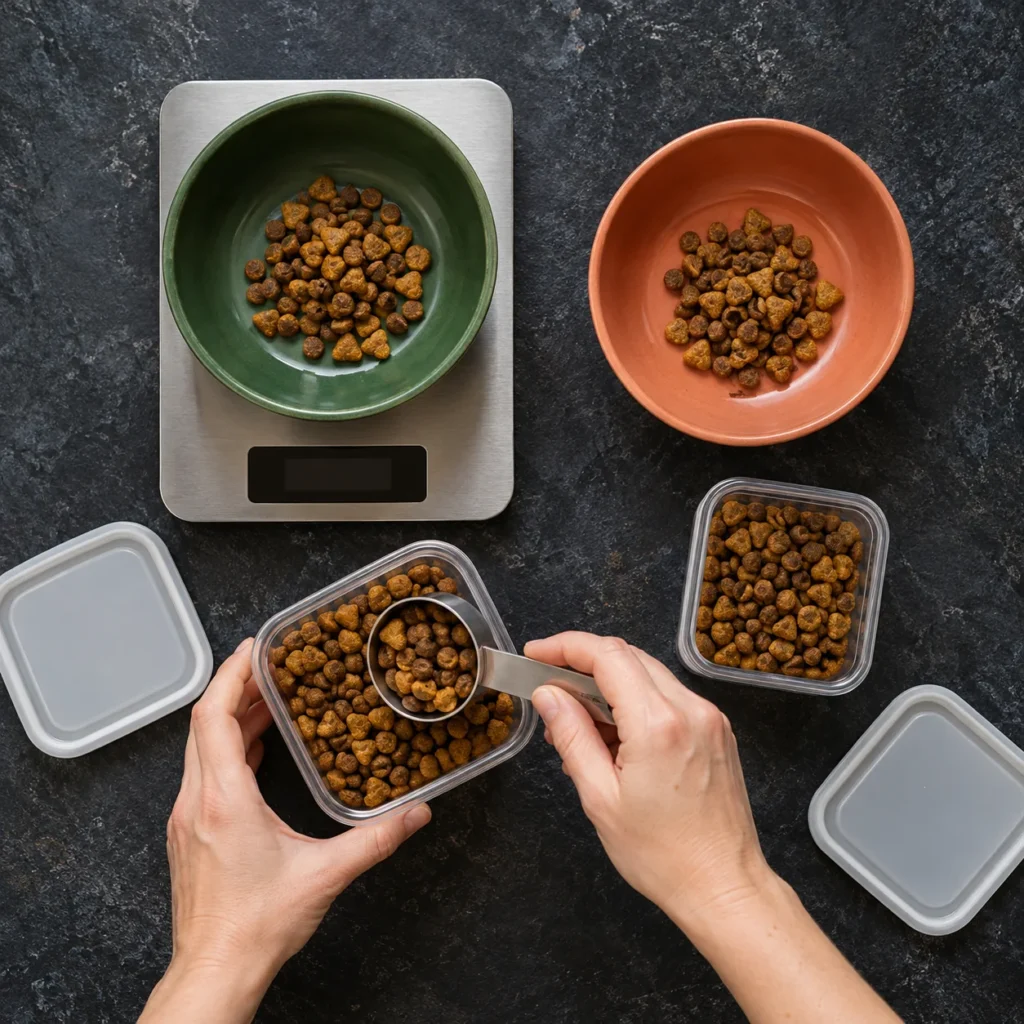
Measure each cat's daily portion
First, give every cat an individual daily food allowance. Use the calorie information on the food label and your veterinarian’s advice to set a portion suited to each cat’s age, body condition and health. Include calories from wet food, dry food and treats in the daily total.
Next, label each cat’s portion container and record how much food you offer and how much remains after each meal. A constantly refilled communal bowl makes it difficult to track how much each cat eats.
The AAHA nutrition guidelines emphasize an individual nutritional plan.
02
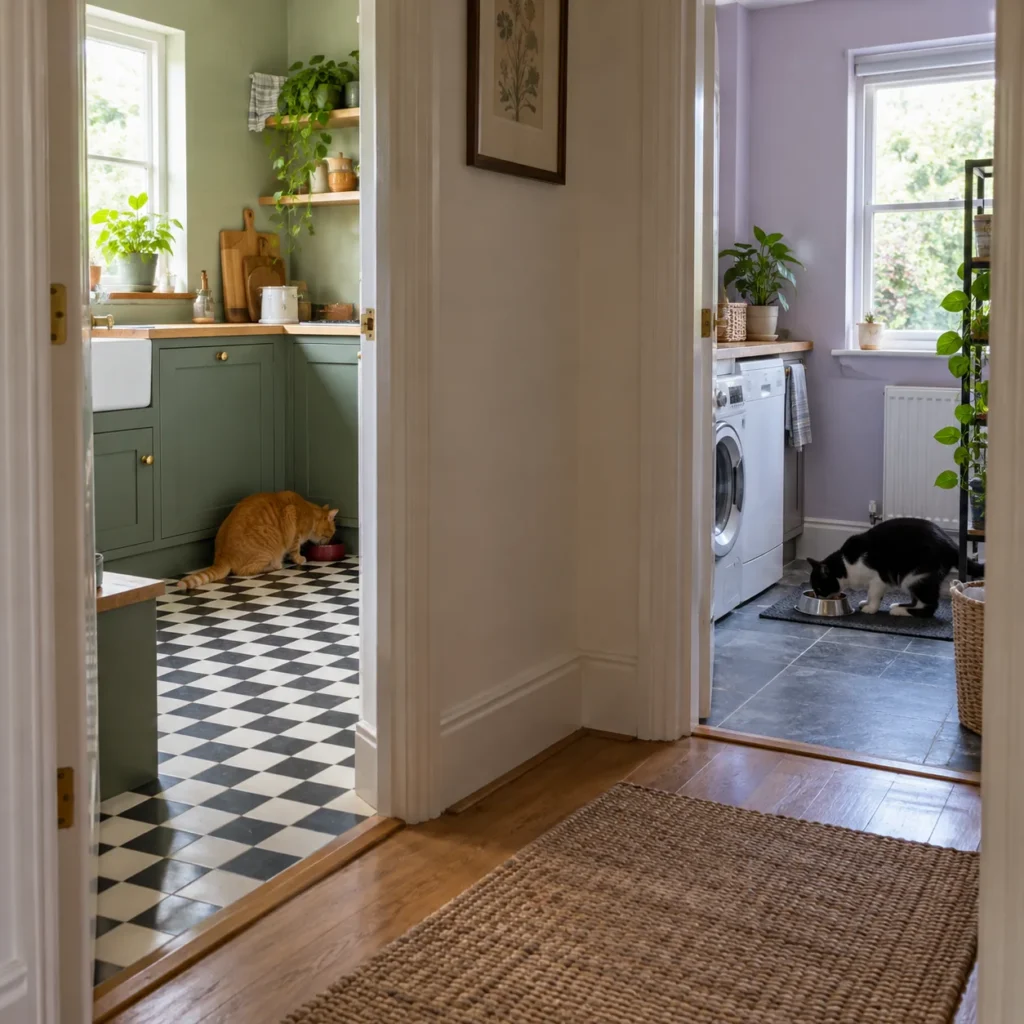
Feed cats in separate spaces
Place each cat’s bowl in a separate, quiet area, with distance and a visual barrier between feeding spots. Bowls placed side by side can still allow one cat to crowd or block another.
For example, put one station in a calm kitchen corner and another on the other side of a solid divider or in a separate room. Make sure each cat can reach its feeding spot easily, especially if it is older, and position food away from litter trays. Check that each cat can approach its bowl and eat comfortably.
03
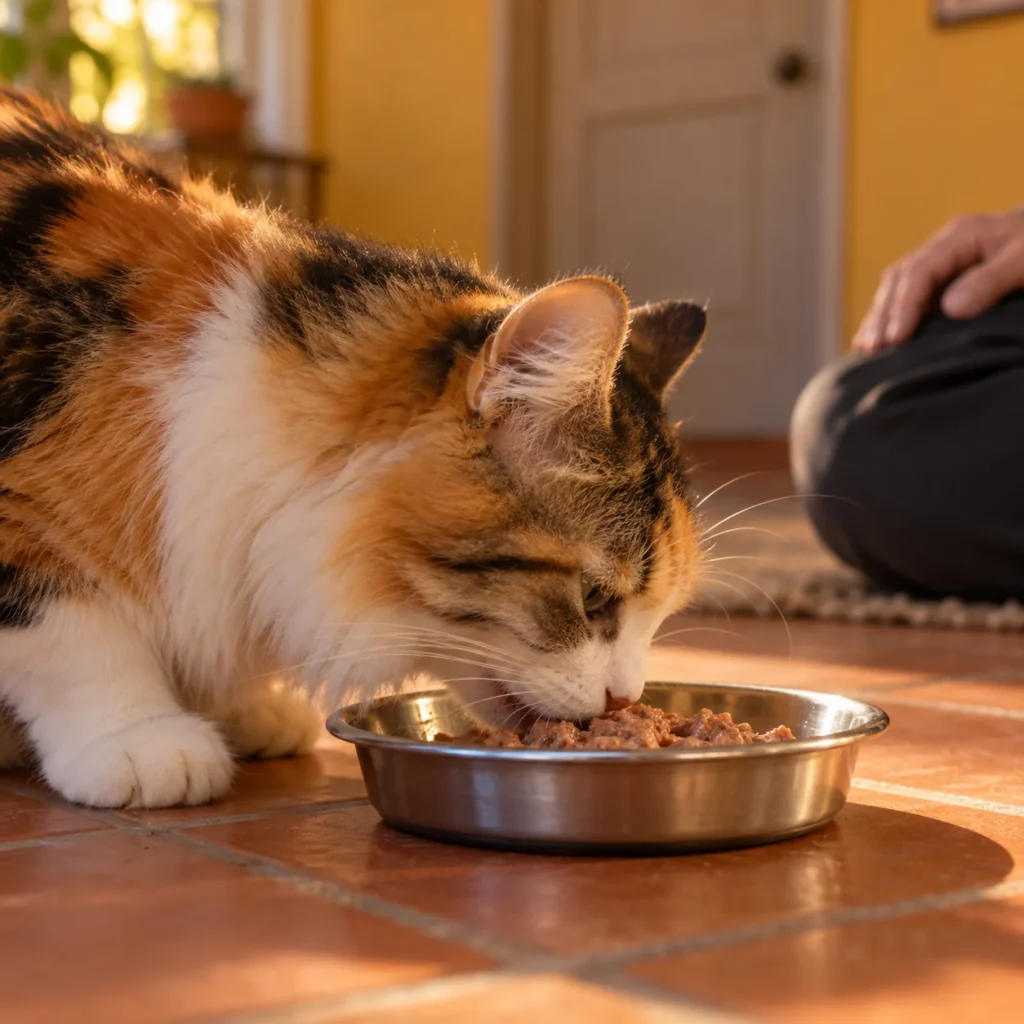
Care for cats that eat slowly
Give a slow eater a quiet, familiar feeding space and enough uninterrupted time to finish. Prepare all portions in advance, then serve each cat in its own space at the same time.
If a fast eater finishes first, calmly keep it in its own comfortable space until the slower cat has finished. Use a closed door when distance alone is not enough. Introduce the arrangement gently and supervise the first meals.
Offer meals at consistent times; VCA’s feeding-routine guidance explains why consistency helps.
04
Control access to each cat's food
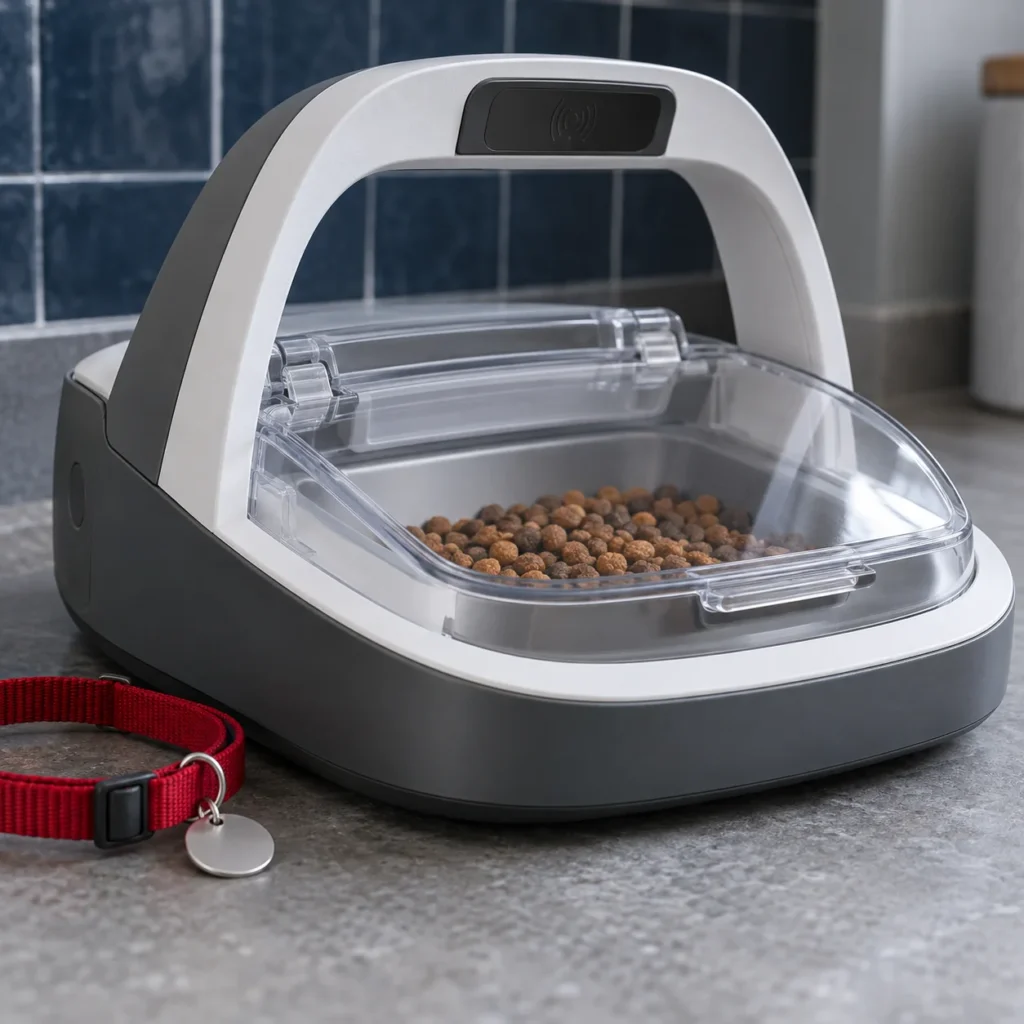
For cats that graze, consider a feeding space only the intended cat can enter or a feeder that unlocks for its registered microchip or compatible collar tag. A timer controls meal timing; it does not identify which cat is eating.
Introduce any feeder gradually and watch the first meals. Confirm that the intended cat can use it comfortably and that another cat cannot reach the food while the feeder is open. Follow the device’s instructions and the food manufacturer’s storage instructions.
05
Use a food puzzle for fast eaters
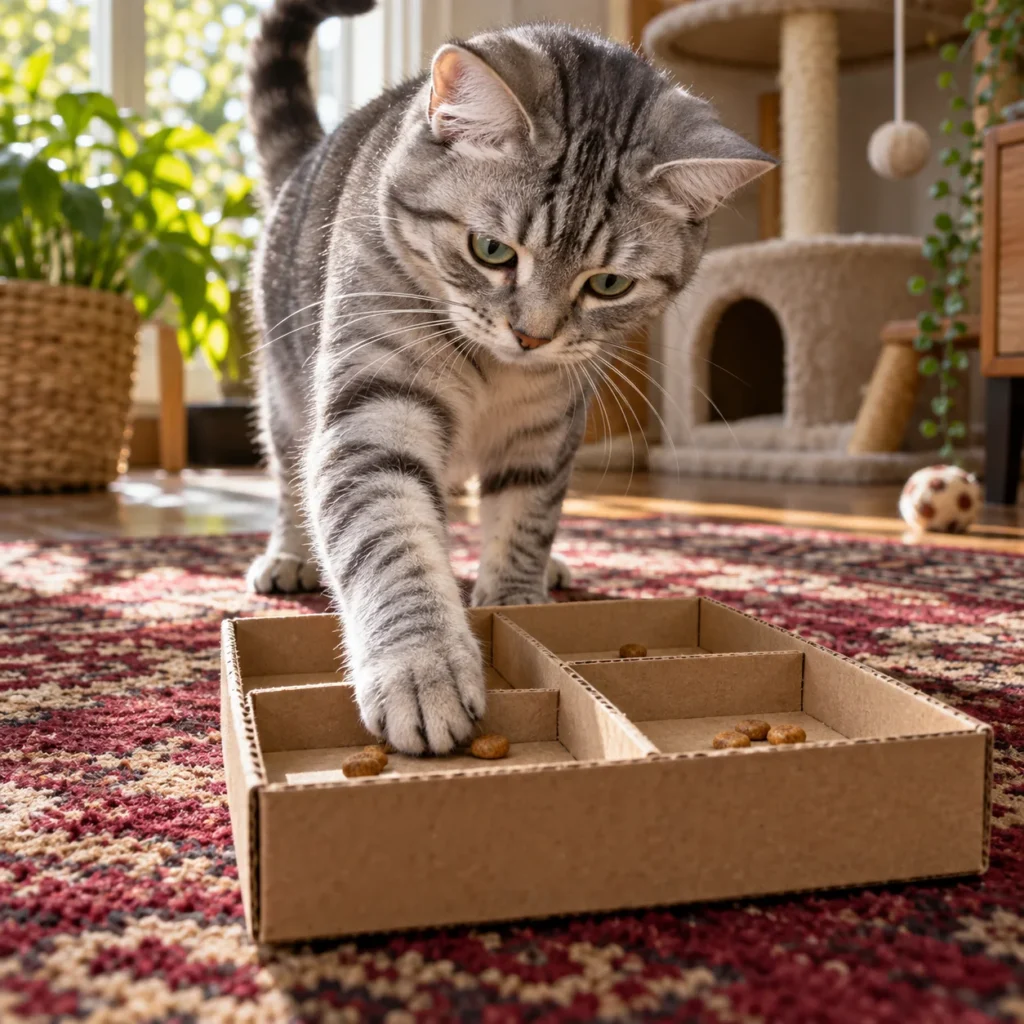
Place part of a fast eater’s measured daily allowance in an easy food puzzle. Start with food the cat can retrieve easily. Let the cat learn at its own pace before making the puzzle more difficult.
Continue to use separate feeding areas: a food puzzle alone will not keep a cat away from another cat’s bowl. If the cat becomes frustrated or cannot get enough food, simplify the setup. The research on feline food puzzles discusses gradual introduction and troubleshooting.
06
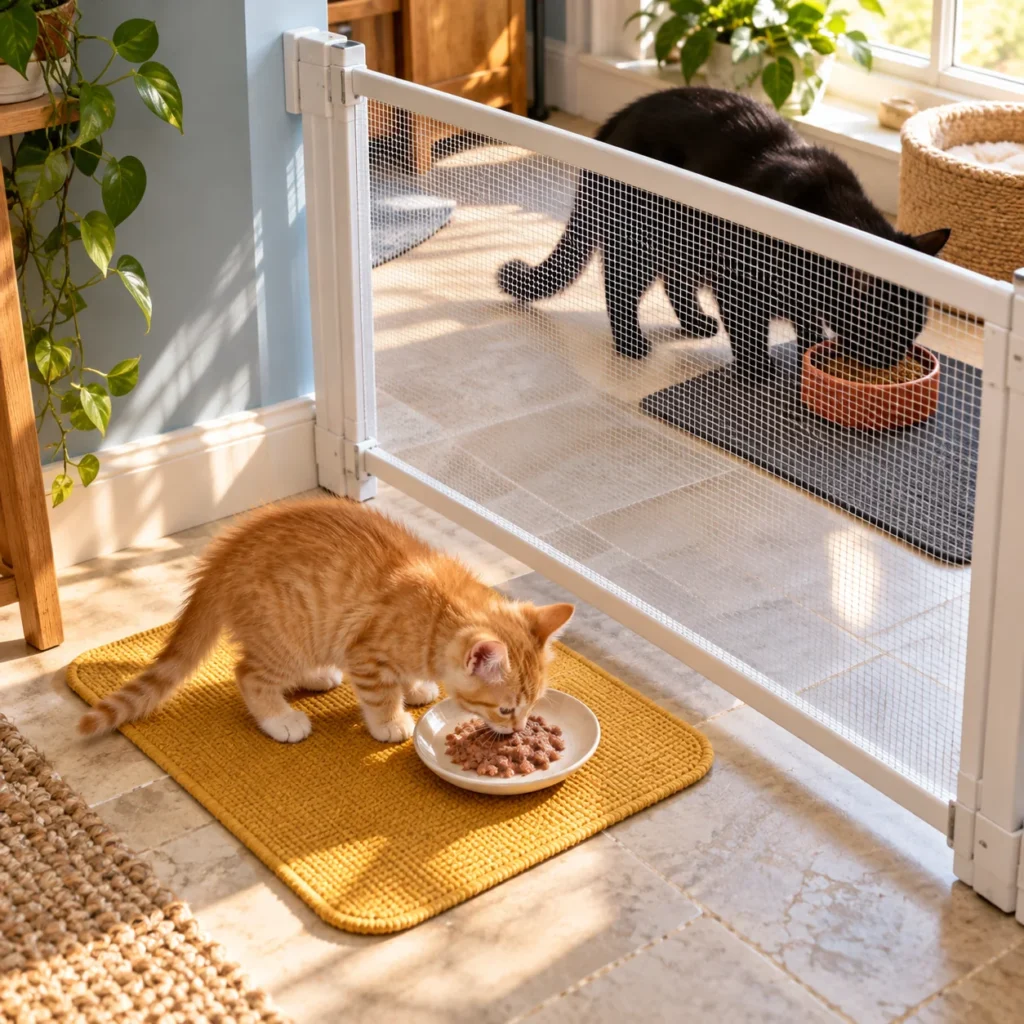
Keep different diets separate
In a home with kittens and adult cats, keep the kitten’s growth diet separate from the adult cat’s food. The nutritional adequacy statement helps identify whether a food is complete and balanced for the relevant life stage.
Serve a prescribed diet only to the cat it was recommended for, and keep that cat from eating the others’ food. Ask your veterinarian how to organize meals when diets differ. If your cats usually graze, adjust the routine gradually while ensuring every cat receives its required food.
AT YOUR CATS' NEXT MEAL
A Simple Multi-Cat Feeding Checklist
Before the bowls go down
- Prepare each cat's measured portion before serving.
- Use familiar, separate stations with visual privacy.
- Check that every cat can reach its own food easily.
After each cat starts eating
- Keep the early finisher away from the slower cat's bowl.
- Record leftovers so you know who ate what.
- Handle unused wet food according to the package directions.
Keep a brief note for each meal: each cat’s name, the type and amount of food served, leftovers and any interference. Share the same note with anyone who feeds your cats, so a second person does not accidentally serve an extra portion.
Review your notes across several meals. Progress means each cat can approach its own food and eat its planned portion comfortably. If food goes missing, check access before changing the allowance.
WHEN THE PATTERN CHANGES
When to Contact Your Veterinarian
Arrange a veterinary check if your cat suddenly seeks food more often or shows weight loss, increased thirst, vomiting or other changes in appetite. VCA’s hyperthyroidism guide lists increased appetite and weight loss among the possible signs of hyperthyroidism.
If a cat stops eating, seek veterinary advice promptly. Persistent guarding or avoidance also warrants help with the household’s behavior and feeding plan.
Sources and Further Reading
COMMON QUESTIONS
Multi-Cat Feeding FAQ
Use these answers to fine-tune the feeding arrangement for your own household.
Can two cats share one food bowl?
Separate bowls in separate feeding areas make it easier to protect access and track each cat’s intake. Even cats that get along may prefer privacy while eating. A communal bowl can hide whether one cat is taking most of the food.
Why does my cat steal food after finishing its own meal?
An available second bowl is an easy opportunity, especially for a fast eater. Food preference or tension around resources can also contribute. Observe the pattern and check the cat’s daily allowance; stealing food alone does not mean the cat needs a larger portion.
Will giving my cat more food stop it from stealing other cats' food?
Extra food may not solve an access or timing problem. Review the measured daily allowance with your veterinarian if hunger seems persistent. At the same time, protect each cat’s feeding space so that the amount intended for one cat stays available to that cat.
Do automatic feeders stop food stealing?
A timed dispenser releases food on a schedule, but another cat can still eat it. A microchip or RFID feeder can help ensure that only the registered cat can access its meal. Choose suitable features, introduce the device gradually and supervise the first few meals to check that it works for your household.
How should I feed a kitten and an adult cat in the same home?
Give the kitten protected access to an appropriate growth diet and the adult cat its own suitable food. Use separate locations and individual portions. If their meal patterns differ, arrange extra protected feeding opportunities for the kitten according to its feeding plan.
Should I separate my cats for every meal?
If one cat repeatedly takes another’s food, a comfortable separate feeding space is a useful starting point. You can reassess the setup once both cats eat reliably and calmly. If guarding, avoidance or conflict continues, ask your veterinarian about behavior support.
FOOD OPTIONS FOR YOUR FEEDING PLAN
BSG Food Options for Multi-Cat Households
The BSG products below offer food options to consider alongside the feeding routine above. Choose food suited to each cat’s life stage and feeding plan, and serve it where the cat can eat undisturbed.
INDIVIDUAL MAIN MEALS
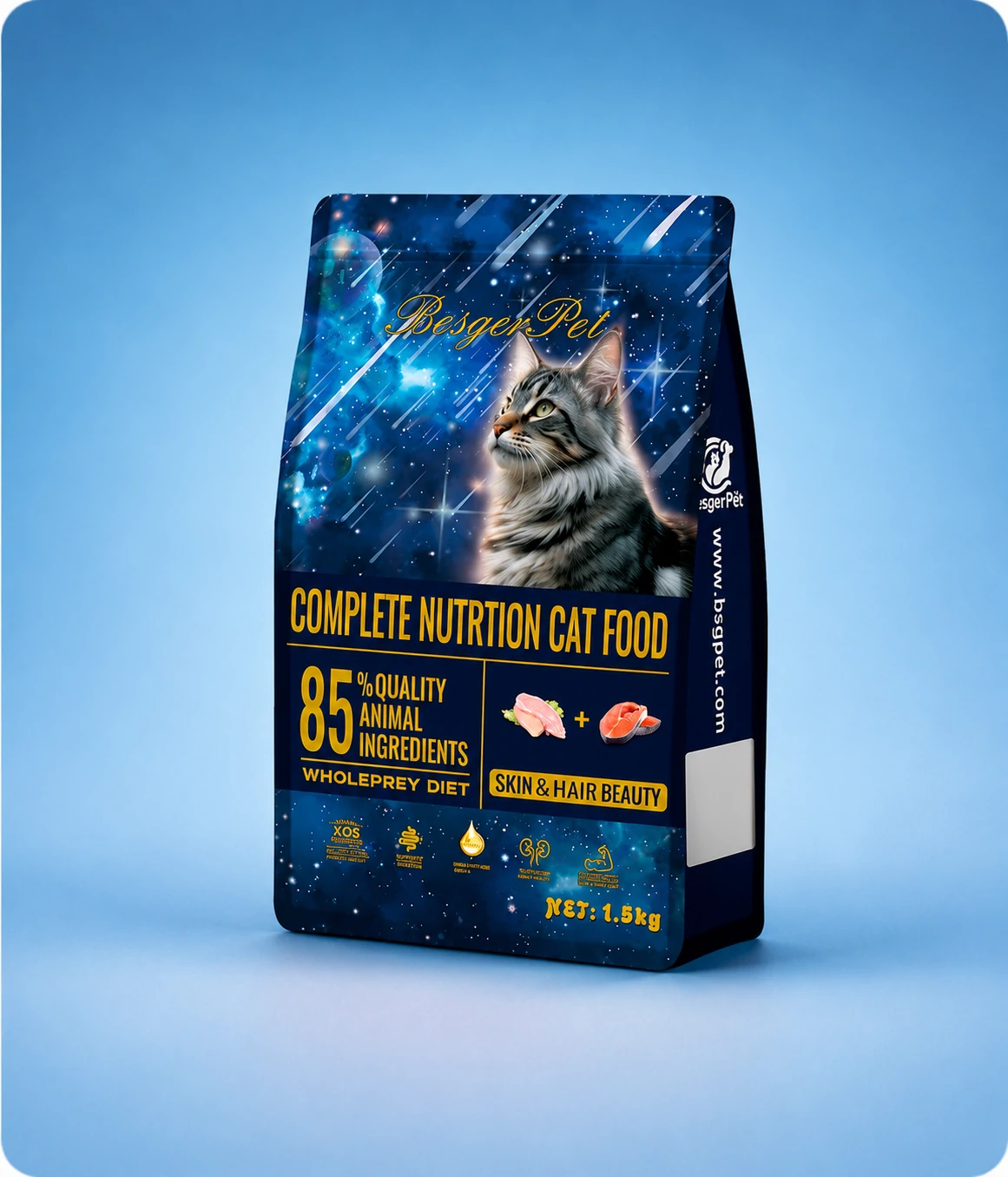
Complete Fresh Meat Cat Food
Consider this BSG cat food range when planning individual meals. Check that the formula is suitable for your cat’s life stage and confirm its calorie content before weighing each portion.
MIXED-AGE HOUSEHOLDS
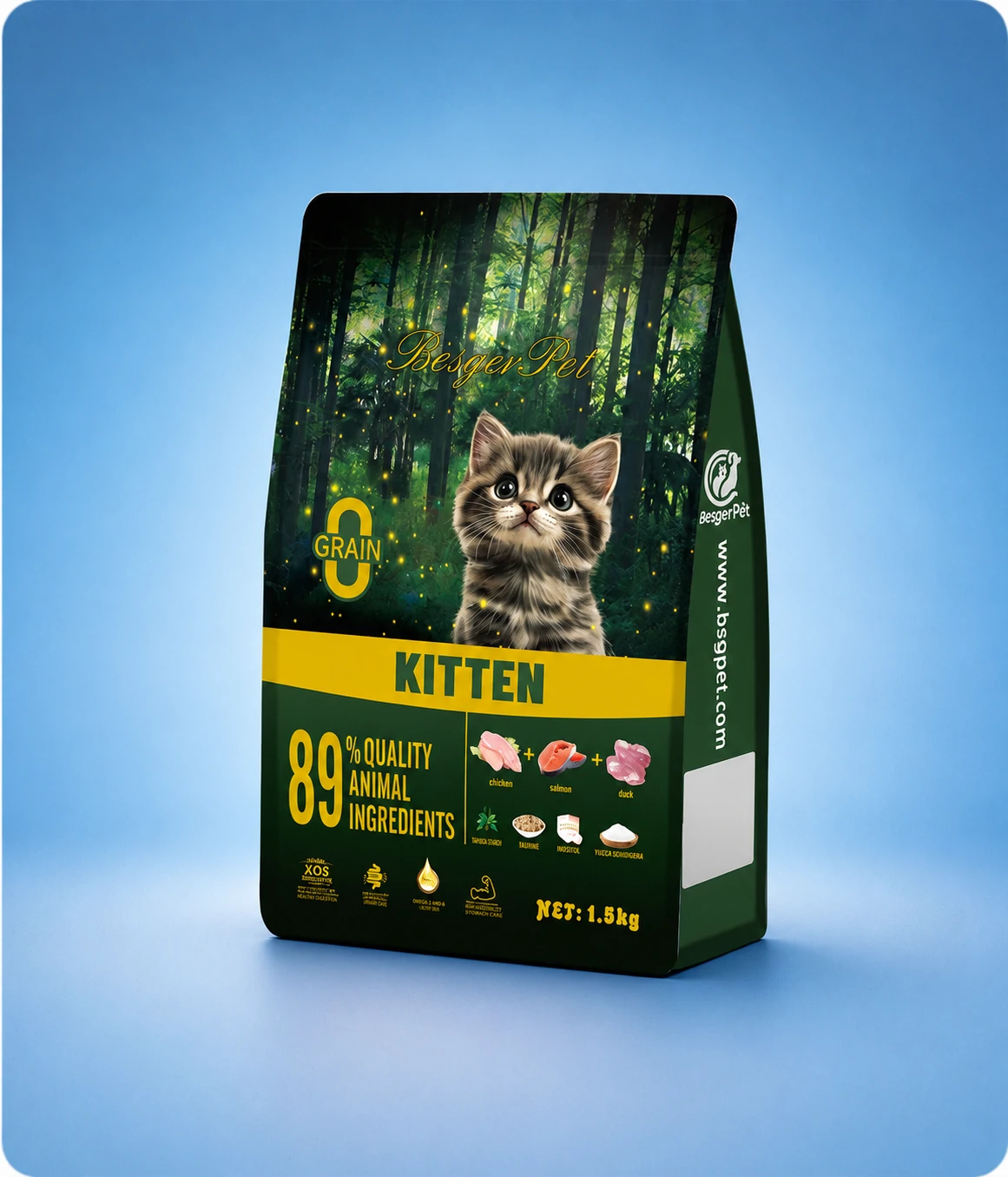
Kitten Cat Dry Food
This dry food is an option to consider for kittens in a mixed-age household. Keep the kitten’s bowl separate and confirm that the product label states that the food is complete and balanced for growth.
SUPERVISED WET MEALS
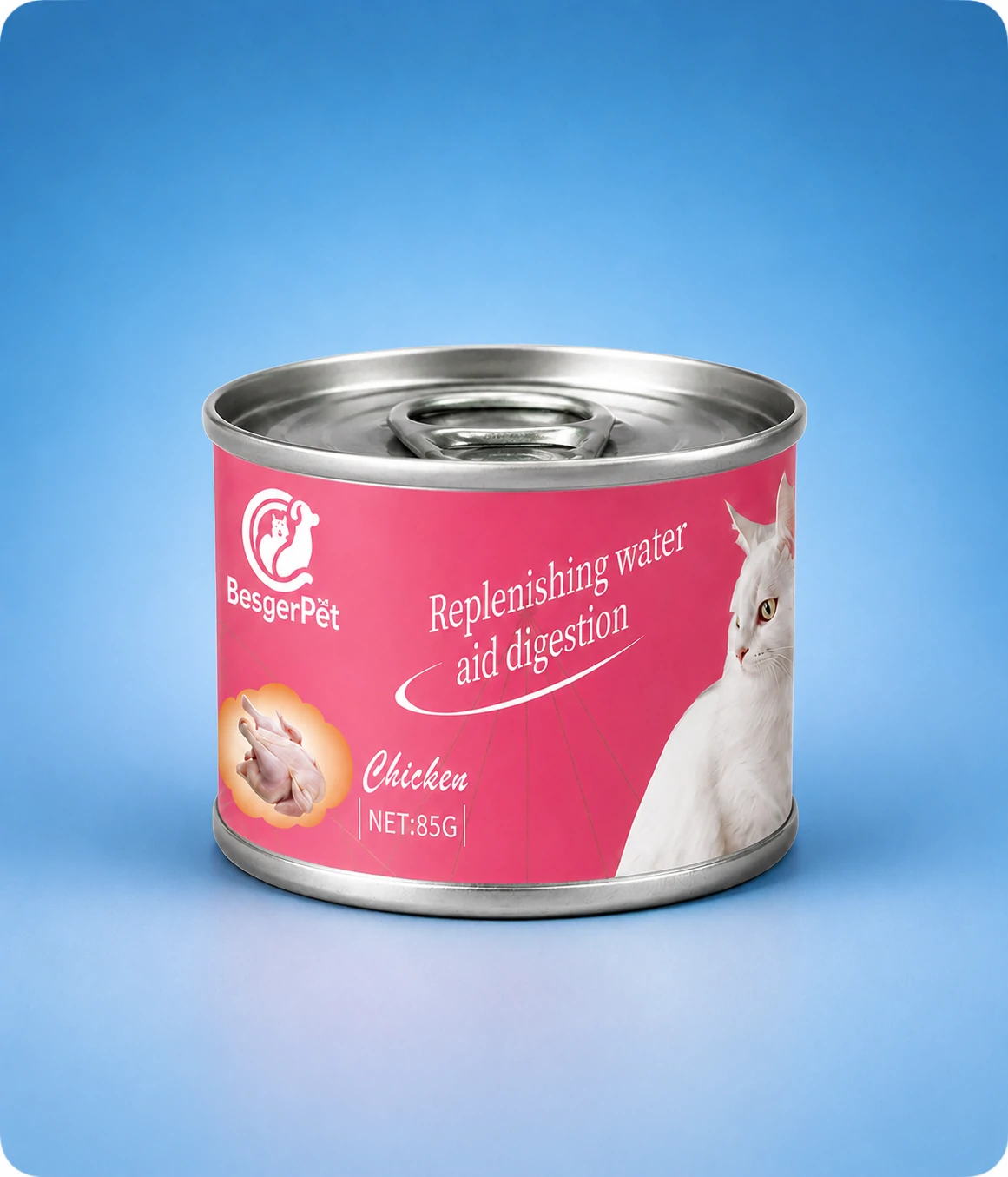
Wet Canned Cat Food 85g
This 85 g can is an option for individually served wet meals. Base the portion on each cat’s feeding plan, since one can may not equal one meal. Follow the storage instructions after opening.
Before selecting a formula, check the product label for its nutritional adequacy statement, feeding directions, calorie content and storage instructions. For more on taste and texture, see our guide to choosing cat food flavors.