
ЖИЗНЬ С НЕСКОЛЬКИМИ КОШКАМИ
Help every cat eat its own food
For a cat stealing other cats’ food, the first priority is protected access to each meal.Prepare individual portions, serve them in separate, comfortable spaces, and keep the fast finisher away until the other cat has finished.
If a cat grazes, protect its later meals too. Start with the setup below, then choose extra tools for the feeding patterns in your home. Each change should help both cats eat comfortably and receive their planned food.
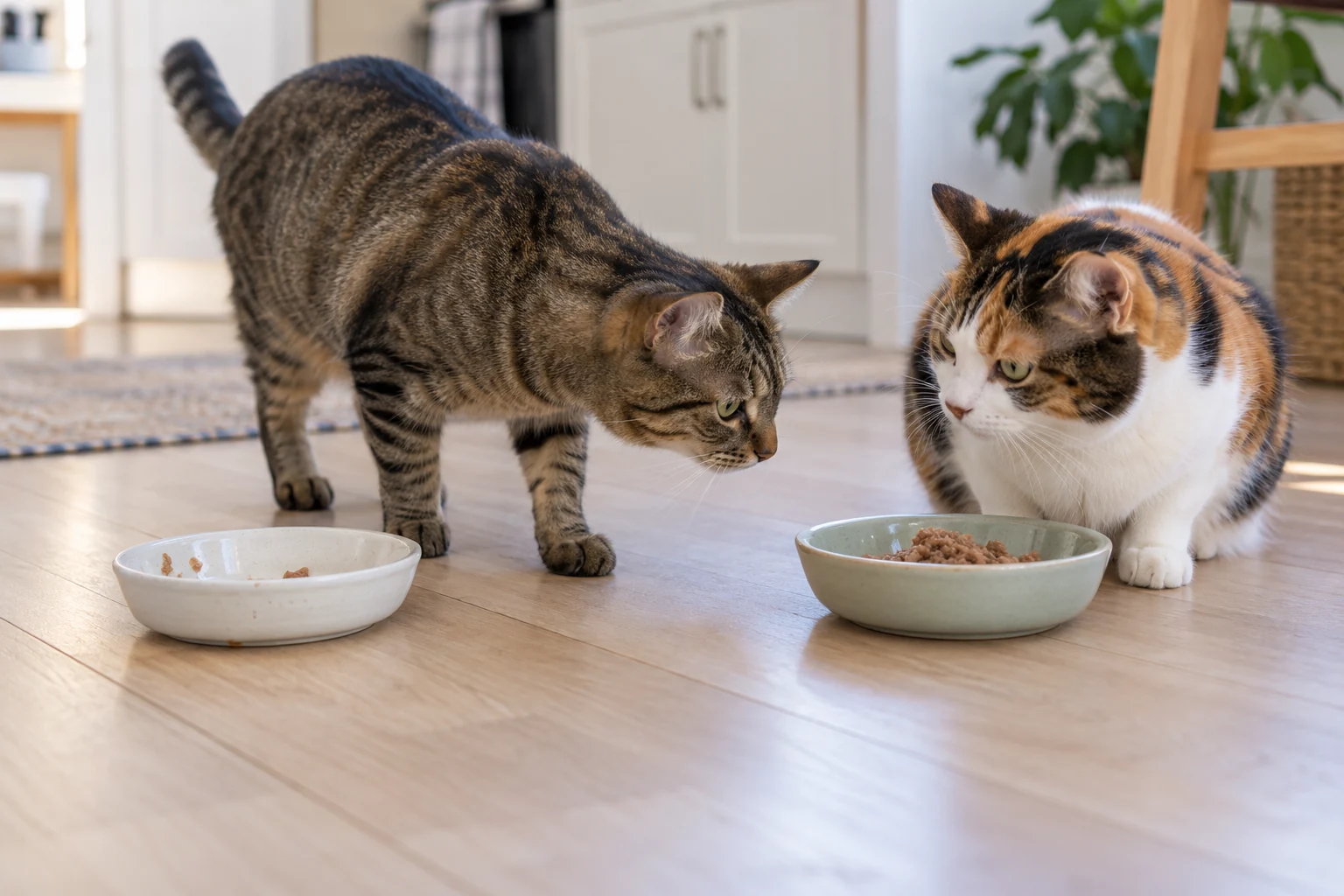
ПРИ СЛЕДУЮЩЕМ КОРМЛЕНИИ ВАШИХ КОШЕК
Start with one protected meal
Prepare the feeding spaces
- Measure each cat's planned portion before serving.
- Choose separate, familiar stations; use closed doors when both cats are comfortable.
- Убедитесь, что каждая кошка может без труда добраться до своего корма.
Protect the time to eat
- Serve the meals at the same time in the separate spaces.
- Keep the fast finisher apart until the slower cat has finished.
- Record leftovers and protect any later feeding opportunities.
Use familiar rooms and introduce the arrangement gradually. If a closed door causes distress or a cat stops eating, adjust the setup and seek veterinary advice. A grazer still needs suitable protected opportunities to eat later.
ПРОЧТИТЕ ИНСТРУКЦИЮ
Why Does My Cat Keep Eating My Other Cat's Food?
Easy access, different eating speeds, food preference, or tension can all contribute to bowl switching. Stealing another meal does not, by itself, prove that a cat needs more calories.
Watch one normal meal: who finishes first, who approaches the other bowl, and who leaves?Cat Friendly Homes describes subtle intercat tension, including staring and blocking access. Choose the response that matches what you actually observe.
СЛЕДИТЕ ЗА ВРЕМЕНЕМ
Быстрый финишер
One cat clears its own bowl, then heads straight to another cat’s meal. The second cat may still be eating normally.
First move:start meals together and keep the early finisher in its own feeding space until the other cat is done.
СМОТРИТЕ «ДОСТУП К ПРОДУКТАМ ПИТАНИЯ»
Кошка, которая отступает
A cat waits, looks around or leaves when another cat approaches. Also watch for staring or a cat blocking the route to the bowl.
First move:offer a quiet feeding spot with visual privacy and an easy way in and out.
WATCH BETWEEN MEALS
The unprotected grazer
One cat returns for small meals, but another eats whatever remains whenever nobody is watching.
First move:protect the grazer’s access between supervised meals. Separate bowls alone will not do this.
ПРАКТИЧЕСКИЙ ПЛАН
Six Ways to Stop a Cat Stealing Other Cats' Food
Methods 1–3 form the basic routine.Methods 4–6 address particular situations; choose those that fit your cats. Food puzzles provide enrichment, while access control protects the other meal. They have different purposes.
01–03 / THE PROTECTED FEEDING ROUTINE
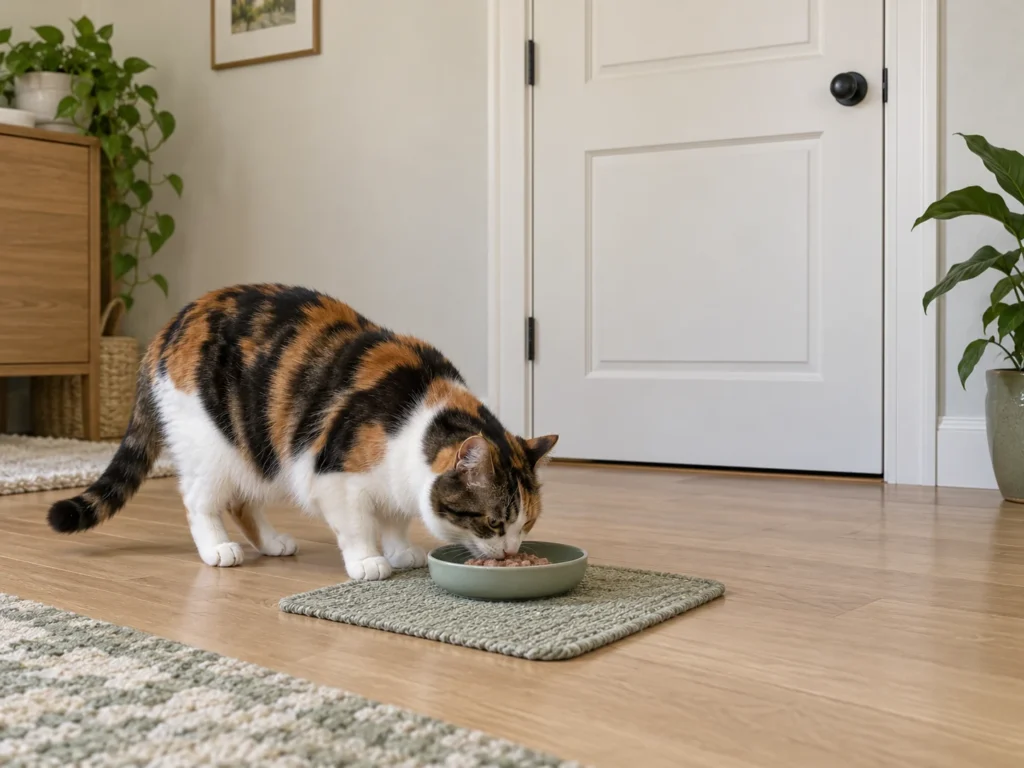
01
Block access to the other bowl
Give each cat a familiar, quiet station. If one cat walks over to steal, use separate rooms with doors closed during the meal, provided the cats are comfortable with this arrangement. Stay nearby while they learn the routine.
A screen provides privacy, but may not prevent access.Check whether a cat can walk around it or cross a gate.FelineVMA recommends distance and visual separation between stations. When a cat steals food, also check that it cannot reach the other bowl.
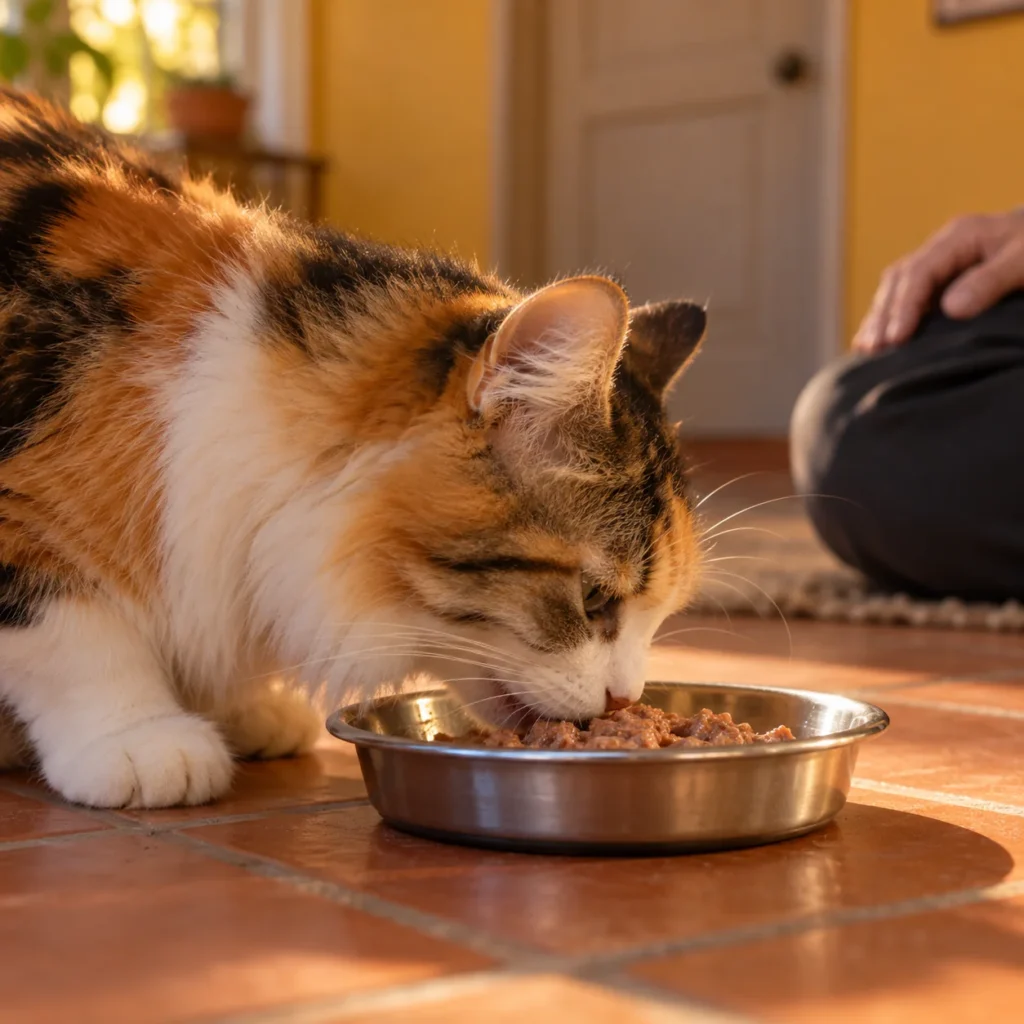
02
Give the slow eater protected time
Prepare both portions before serving. When the first cat finishes, keep it in its comfortable space while the slower cat eats. Do not end the slower cat’s meal just because the other cat is ready to leave.
A cat that eats small amounts throughout the day may need several protected opportunities, rather than a short shared feeding window. Use a consistent routine that fits each cat’s plan;VCA discusses feeding schedules.
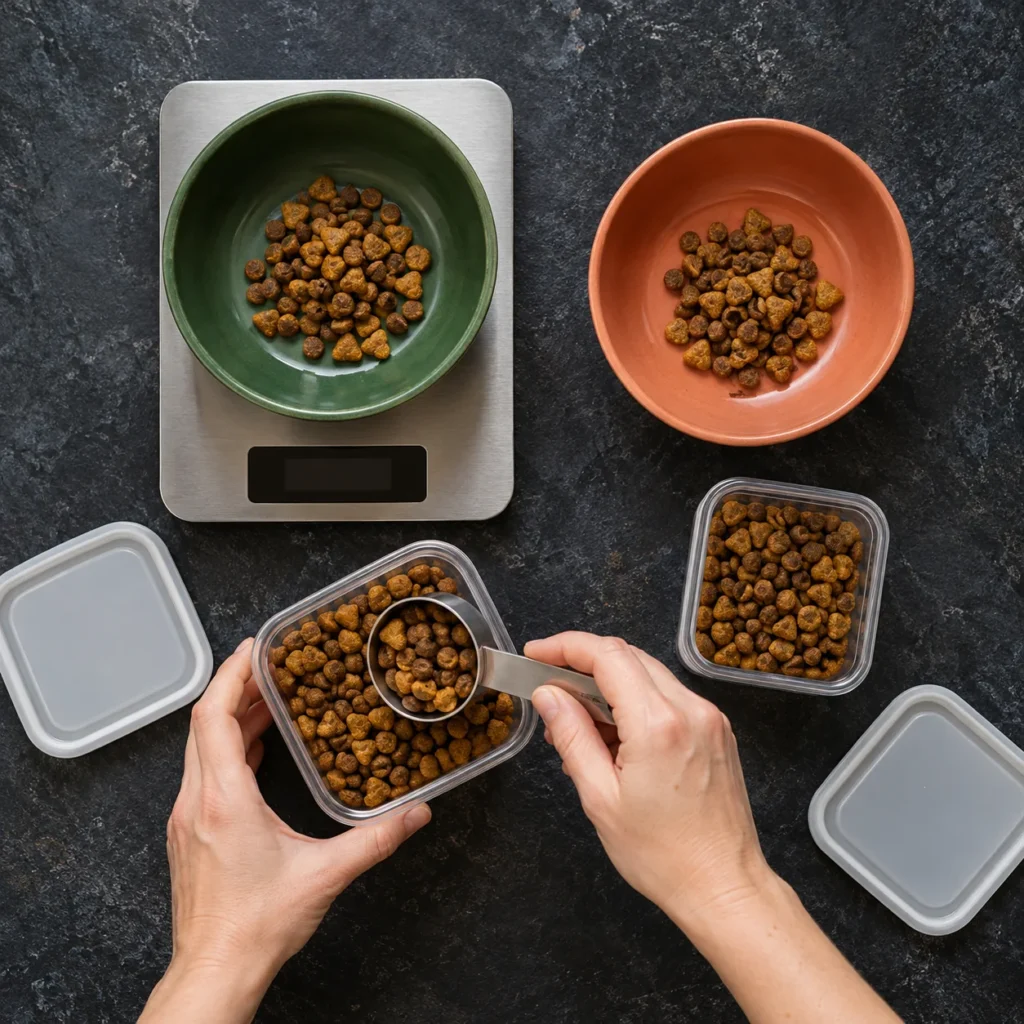
03
Set an individual food allowance
Use the food’s calories and an individual feeding plan to determine each cat’s allowance. Include wet food, dry food, and treats. TheAAHA nutrition guidelinessupport individual assessment rather than a shared allowance.
Label portions and record what is offered and left behind. Keep food available to its intended cat; a measured portion can still be stolen. Review persistent hunger or weight changes with your veterinarian before automatically adding more food.
Feeding photographs illustrate the method, not the amount to serve. Set portions from the food’s calories and each cat’s feeding plan.
04–06 / CHOOSE WHAT FITS YOUR HOUSEHOLD
04
Control a grazer's food access
When nobody is supervising, use a feeding area only the intended cat can enter or consider a feeder that checks its microchip or compatible tag.
Introduce it while you are home. Confirm that the intended cat can open it and return later, and that another cat cannot reach around the lid or follow it to the bowl. Follow the food label and device instructions for storage; a lid alone does not establish a safe holding time.
- Timed feeder: controls when food appears.
- Microchip or tag feeder: checks identity before opening.
05
Use puzzles as enrichment
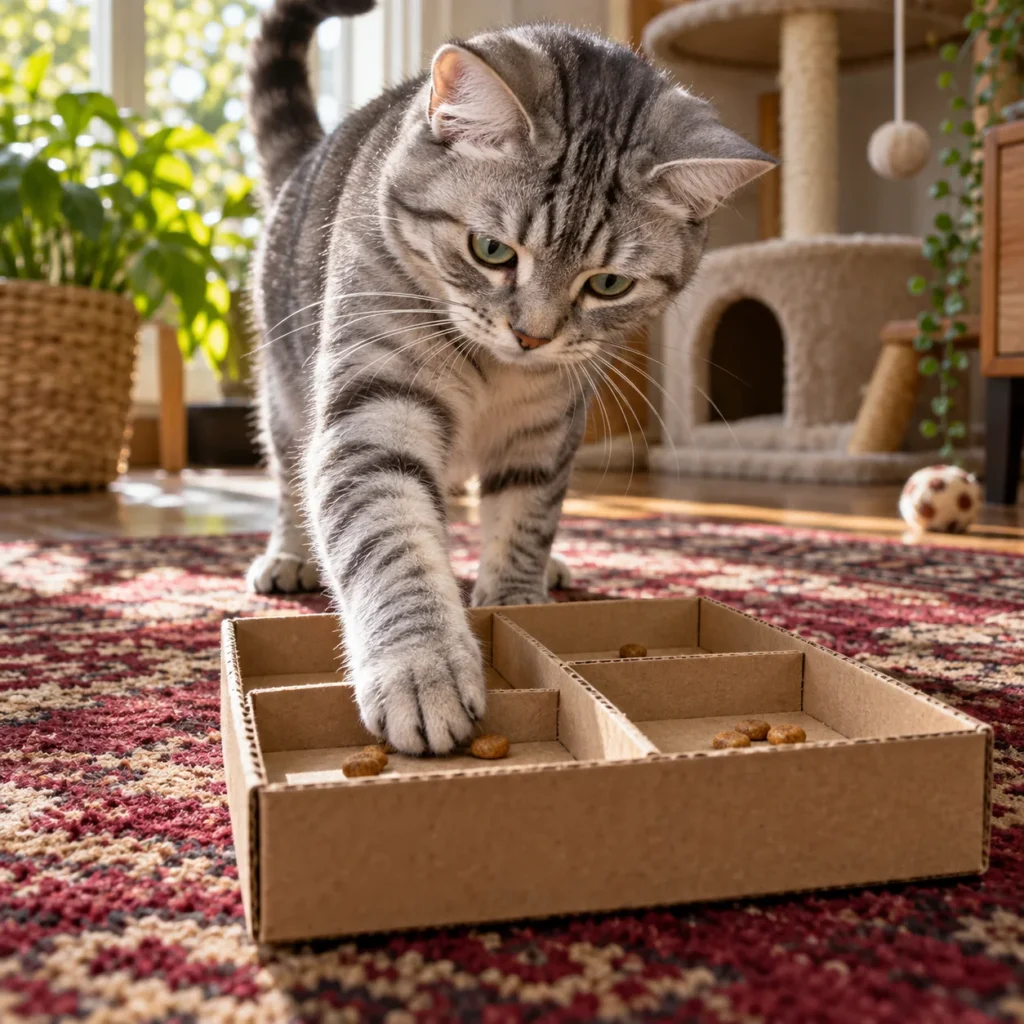
Offer part of a fast eater’s planned allowance in an easy food puzzle. Begin with food the cat can retrieve readily, then increase difficulty gradually if it accepts the puzzle.
Keep the other cat’s meal protected. A busy cat can still leave a puzzle and take another bowl. If access becomes frustrating or intake falls, simplify the puzzle.Feline food-puzzle researchdiscusses introduction and troubleshooting.
06
Keep different feeding plans separate
Kittens, adult cats, and cats on prescribed diets may need different food and meal patterns. Use thenutritional adequacy statementto check life-stage suitability.
Protect a kitten’s extra meals instead of fitting it into an adult-only schedule. Ask your veterinarian how to prevent sharing when a prescribed diet is involved. Thefood examples belowshow label checks for adult, kitten, and wet-food options.
CHECK THE WHOLE MEAL
How to tell whether the routine is working
Keep a short meal record
- Cat's name and exact recipe
- Portion offered and leftovers
- Any approach to the other bowl
- Comfort while eating and returning
Success means both cats eat their planned food comfortably.An empty bowl does not show which cat ate it, and a distracted fast eater does not prove the slower cat received enough.
Compare several meals and share the record with everyone who feeds your cats. Reassess repeated interference, food avoidance, or poor intake rather than simply adding more food.
КОГДА МЕНЯЕТСЯ ТЕНДЕНЦИЯ
Когда следует обратиться к ветеринару
Arrange a veterinary check if your cat suddenly seeks food more often or shows weight loss, increased thirst, vomiting or other changes in appetite.VCA’s hyperthyroidism guidelists increased appetite and weight loss among the possible signs of hyperthyroidism.
If a cat stops eating, seek veterinary advice promptly. Persistent guarding or avoidance also warrants help with the household’s behavior and feeding plan.
ЧАСТО ЗАДАВАЕМЫЕ ВОПРОСЫ
Questions About Cats Eating Each Other's Food
These answers cover the situations that often remain after the bowls have been separated.
How do I stop one cat eating the other's food while I am at work?
Protect access before leaving. A cat that grazes needs a feeding area or identification-controlled feeder the other cat cannot use. A timed dispenser alone cannot tell your cats apart. Test the arrangement while you are home, and confirm that each cat can still eat its planned allowance.
Can I stop food stealing without buying a microchip feeder?
For meals you can supervise, separate, comfortable rooms with closed doors are a practical starting point. In a small home, use a familiar space that can be safely separated or supervise stations with an effective barrier. A visual screen alone may not prevent access. Cats that graze also need protection between supervised meals.
My cat steals food after finishing. Should I increase its portion?
Not automatically. The other bowl may simply be available, or the cats may have different eating speeds or preferences. Check each cat’s individual allowance and intake before changing portions. If hunger is new or comes with weight loss or other changes, arrange a veterinary check.
Will an automatic feeder keep my cats' meals separate?
Check what ‘automatic’ means. A timed feeder releases a meal on schedule; a microchip or compatible tag feeder checks identity. Even with identification, watch whether another cat can reach food while the lid is open. Use separate feeding areas and verify that the intended cat accepts the device.
What if my kitten or a cat on a veterinary diet eats the other food?
Keep those feeding plans separate and ask your veterinarian how to manage any diet mix-up. The amount eaten, the cat’s health, and the reason for a prescribed diet matter. Give the kitten appropriate protected feeding opportunities rather than restricting it to a schedule that suits only the adult cat.
How can I tell whether the new feeding setup is working?
Check more than whether the stealing cat stays busy. Each cat should be able to approach its own food, eat its planned portion, and leave without being blocked. Record leftovers across several meals. If one cat avoids food, eats less, or loses weight, reassess the setup with your veterinarian.
ВАРИАНТЫ ПИТАНИЯ ДЛЯ ВАШЕЙ ДИЕТЫ
Match the food to each cat's feeding plan
Once food access is protected, choose a suitable recipe for each cat. The BSG examples below cover three feeding situations. Use the current label to confirm suitability; the feeding arrangement still needs to keep each portion available to its intended cat.
ADULT CATS / DAILY RATIONS
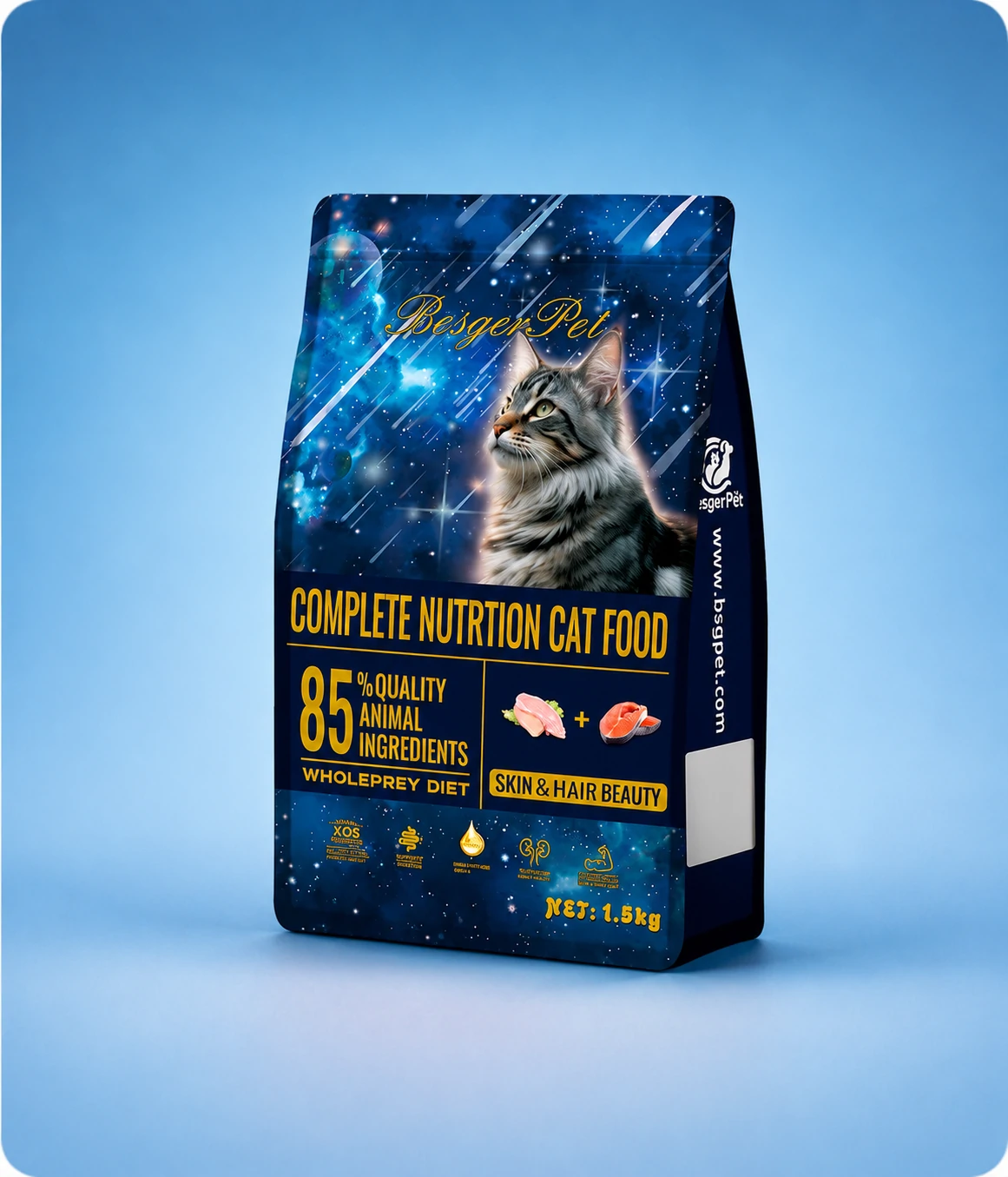
Adult Dry Cat Food
Relevant use:BSG lists its Complete Fresh Meat Cat Food for adult cats. Use the current recipe details when planning a measured daily ration.
Check before choosing:the exact recipe’s nutritional adequacy, calories per gram, and feeding directions. Divide the planned allowance between protected feeding opportunities.
KITTENS / GROWTH FEEDING
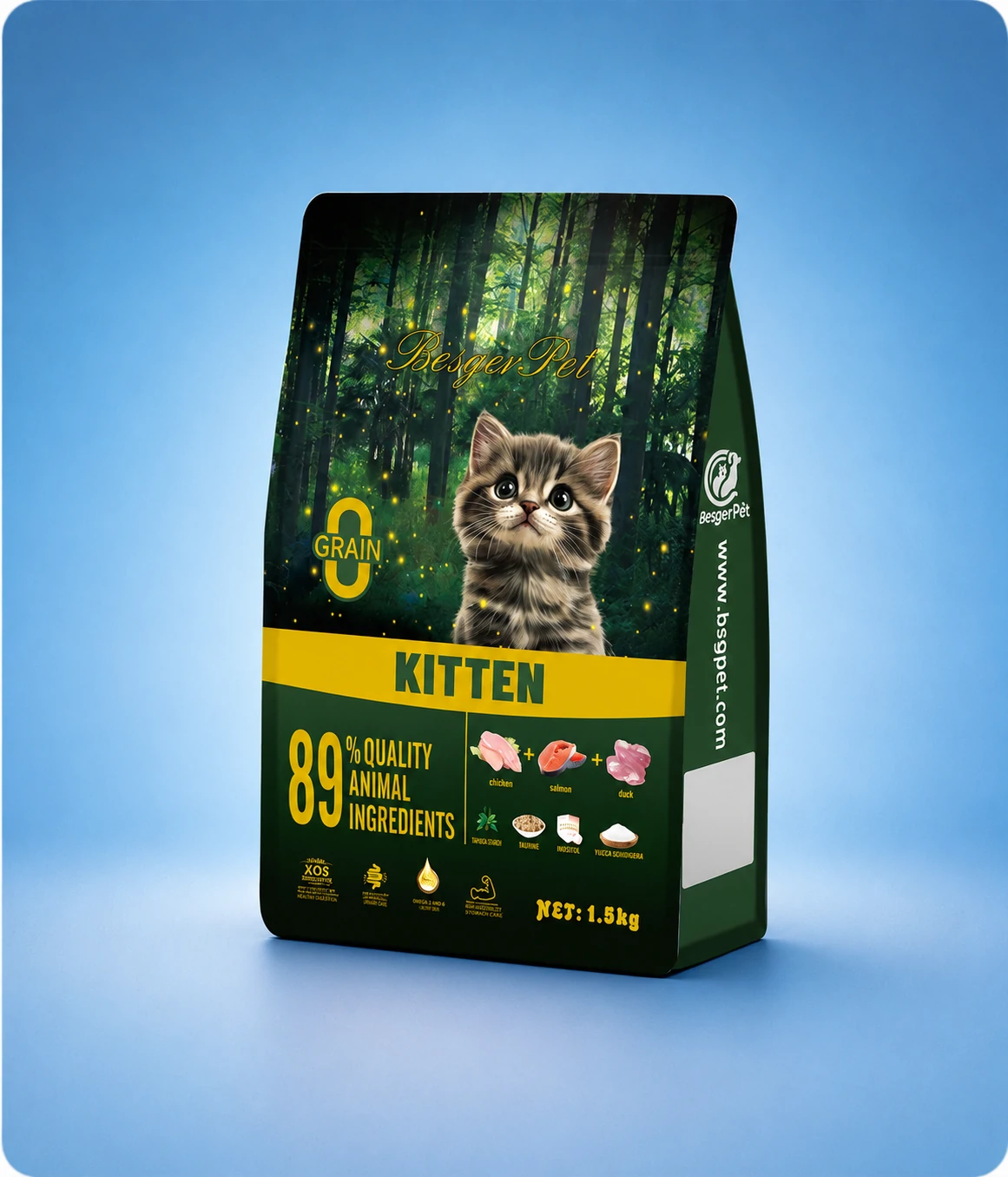
Kitten Dry Cat Food
Relevant use:a growing kitten living with adult cats. The product page describes a kitten formula.
Check before choosing:suitability for growth and calorie content on the current label. Protect any additional meals in the kitten’s plan.
WET FOOD / MEALTIME USE
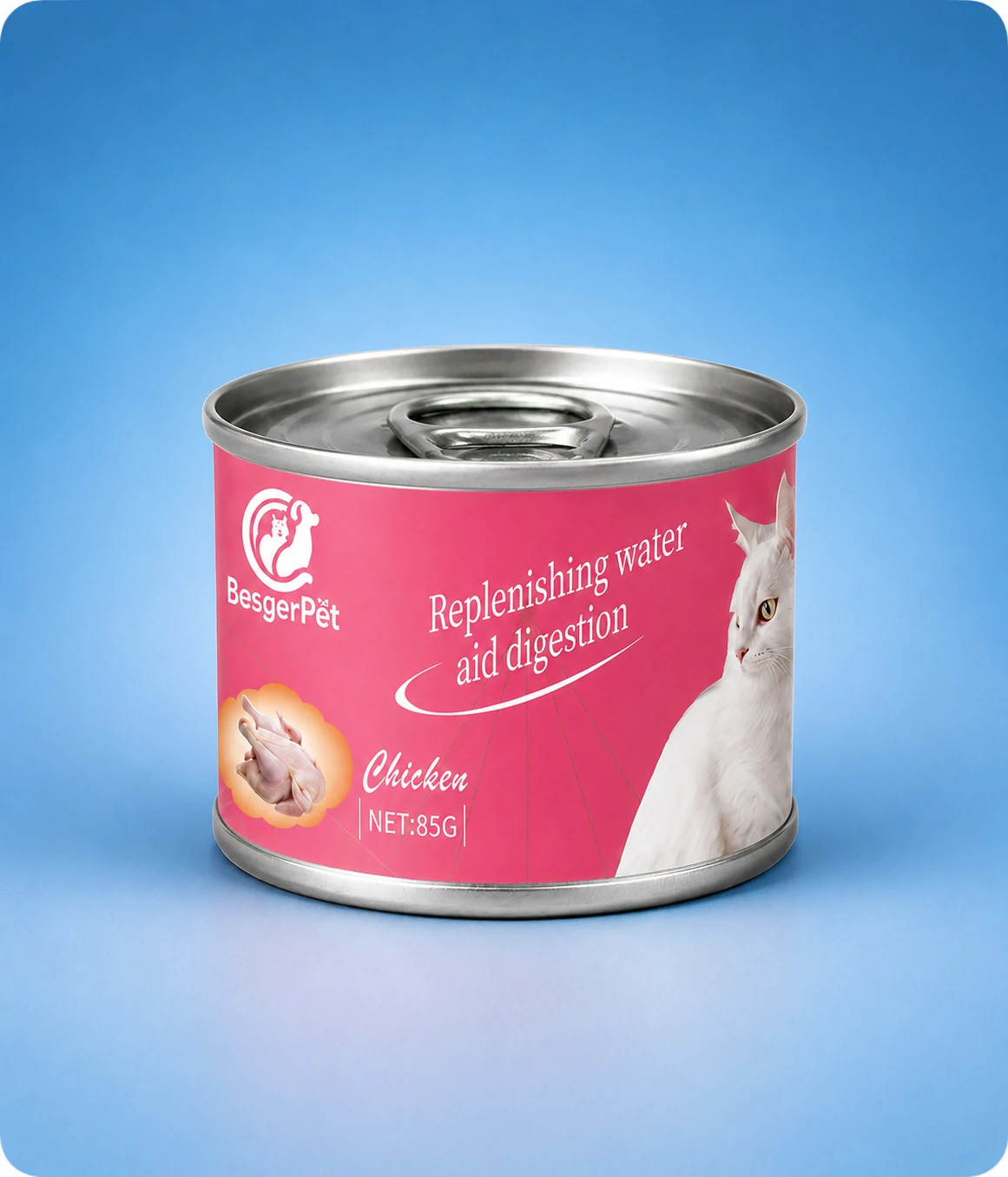
85 g Canned Cat Food
Relevant use:individually served wet meals. The page lists an 85 g can for cats over three months old.
Check before choosing:complete or supplemental status, calories, and storage directions. One can does not automatically equal one meal.
Request the selected recipe’s full label, calorie content, and storage instructions. Follow your veterinarian’s plan for a prescribed diet. For the separate question of food acceptance, see ourguide to cat food flavors and textures.